
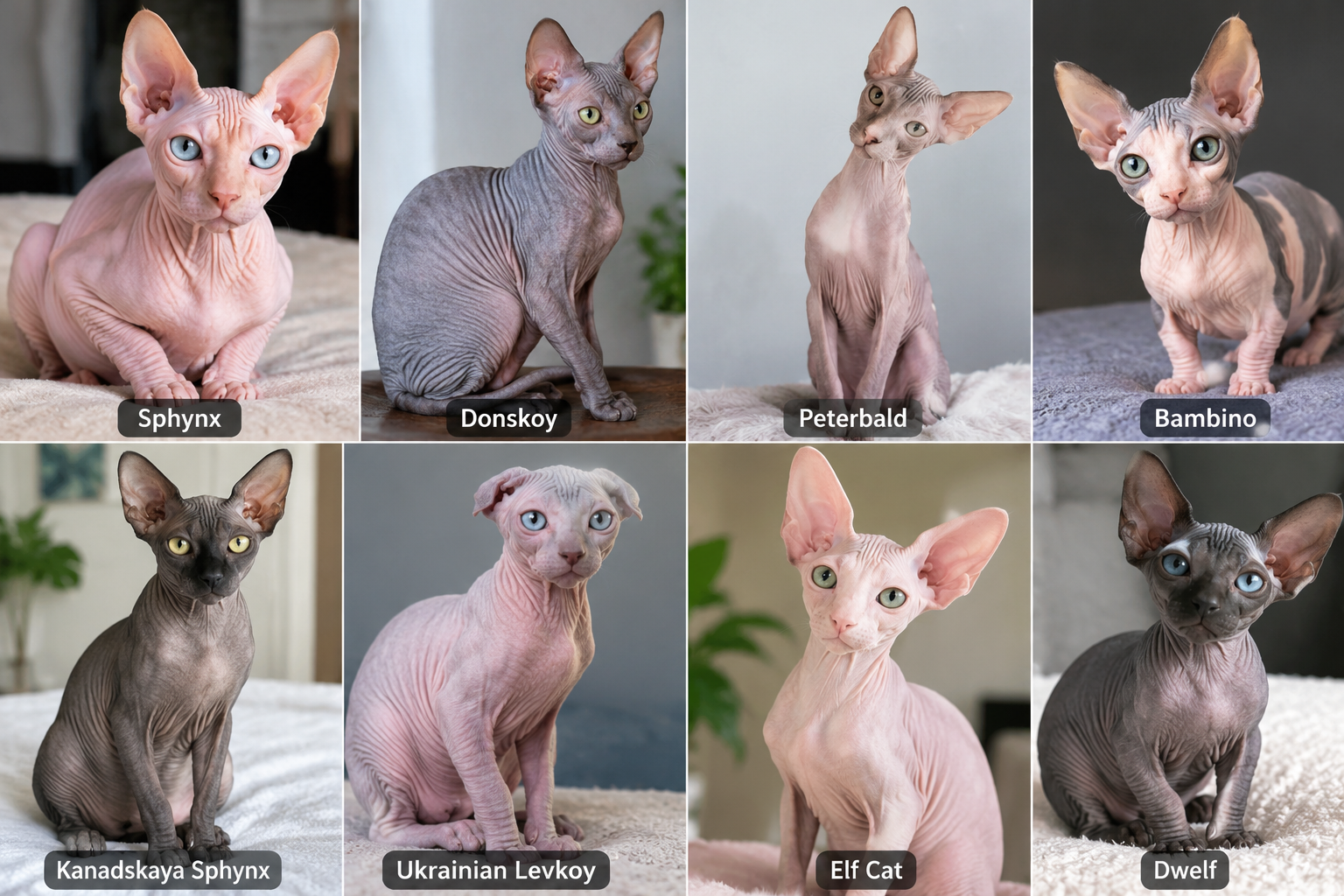
Hairless cats are some of the most unusual and recognizable cats in the world. Their smooth skin, large ears, expressive eyes, and distinctive wrinkles make them stand out from traditional cat breeds. Although they may appear completely bald, many hairless cats actually have a very fine layer of fuzz that can feel soft and velvety.
Popular breeds include the Sphynx, Peterbald, Donskoy, Bambino, Elf Cat, Lykoi, and Ukrainian Levkoy. Each breed has its own appearance, personality, and care requirements.
However, owning hairless cats requires more than simply choosing a unique-looking pet. Their skin, temperature, ears, and overall health need regular attention.
What Are Hairless Cats?
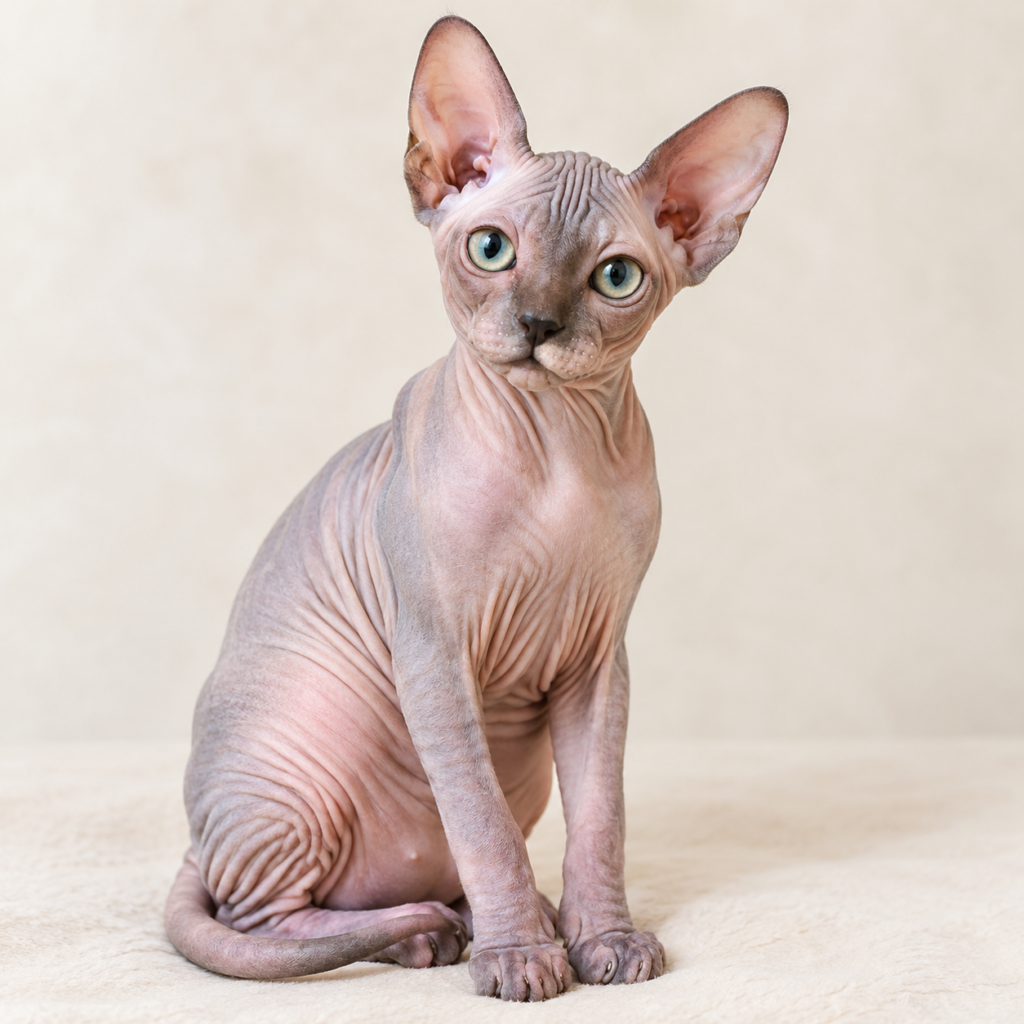
Hairless cats are cats that have little or no traditional fur because of genetic traits affecting hair growth. Some are completely bald, while others have a fine layer of down or different types of short coats.
Without a normal coat, natural oils can accumulate directly on the skin. This is one reason hairless cats may need more regular skin care than cats with ordinary fur.
Hairless cats can also be more sensitive to changes in temperature because they do not have the same natural insulation provided by a thick coat.
Popular Hairless Cat Breeds
There are several hairless or nearly hairless cat breeds. Here are some of the best-known varieties.
1. Sphynx
The Sphynx is probably the most famous of all hairless cats. The breed originated in Canada and became the classic example of a hairless cat.
Despite their bald appearance, Sphynx cats usually have a fine layer of fuzz. They are known for being affectionate, playful, curious, and highly social.
Sphynx cats often enjoy spending time with people and can form strong bonds with their owners. Because they have little fur, their skin needs regular attention, and they may need extra warmth in colder conditions.
2. Peterbald
The Peterbald originated in Russia and is known for its elegant body, long limbs, and large ears.
Not every Peterbald is completely hairless. Coat types can range from completely bald to fine fuzz and other coat variations.
These cats are generally described as intelligent, friendly, energetic, and social. Their thin skin and reduced hair coverage mean owners should pay attention to warmth and skin care.
3. Donskoy
The Donskoy, also called the Don Sphynx, is another well-known hairless breed from Russia.
Although it resembles the Canadian Sphynx, the two breeds have different genetic backgrounds. Donskoy cats can have different degrees of hairlessness, with some losing their hair as they mature.
They are often described as affectionate, intelligent, and friendly. Regular attention to their skin, ears, and skin folds can help maintain good hygiene.
4. Bambino
The Bambino is a smaller hairless cat developed from the Sphynx and Munchkin.
Its most recognizable feature is its short legs combined with a hairless or nearly hairless body. Bambinos are generally active, playful, and social.
Because of their unusual body structure, potential owners should research responsible breeding and health considerations carefully before choosing one.
5. Elf Cat
The Elf Cat was developed by crossing the Sphynx with the American Curl.
Its most distinctive feature is its curled ears. Like other hairless cats, it may have little or no visible fur and requires attention to skin care.
Elf Cats are generally described as playful, friendly, and curious, although they remain relatively uncommon compared with the Sphynx.
6. Lykoi
The Lykoi, sometimes called the “werewolf cat,” is different from typical hairless cats.
Instead of being completely bald, the Lykoi has an unusual sparse coat with irregular hair growth. Its distinctive appearance gives it a partially hairless or scruffy look.
The breed can also shed its coat periodically, making its appearance different from completely hairless breeds.
7. Ukrainian Levkoy
The Ukrainian Levkoy is recognized for its unusual combination of reduced hair and folded ears.
The breed was developed using the Donskoy and Scottish Fold. Because it is a relatively newer breed, responsible breeding and health considerations are particularly important when choosing one.
Are Hairless Cats Really Completely Bald?
Not always.
Many people assume that hairless cats have absolutely no hair, but this is not necessarily true. Some have extremely fine fuzz that may be difficult to see.
Different breeds can also have different coat types. For example, some Peterbalds can have fuzz or other forms of coat, while the Lykoi has a sparse and unusual coat.
So, “hairless” does not always mean completely bald.
Hairless Cat Care
Hairless cats need a consistent care routine. Their lack of a traditional coat changes the way owners need to approach grooming and temperature management.
Skin Care
Natural oils that would normally be absorbed by fur can remain on the skin.
For this reason, hairless cats may need regular gentle cleaning. A soft, damp cloth can help remove excess oil and dirt.
Bathing may sometimes be necessary, but it should not be excessive because frequent bathing can irritate or dry the skin. A veterinarian can recommend an appropriate routine and suitable cat-safe products.
Ear Care
Hairless cats can experience oil and wax buildup around their ears.
Regularly checking the ears can help owners notice problems early. If there is unusual discharge, irritation, odor, or persistent scratching, veterinary advice should be sought.
Nail Care
Natural oils can also collect around the nail beds. Regular nail care and gentle cleaning can therefore be an important part of a hairless cat’s grooming routine.
Keeping Hairless Cats Warm
Because they have little or no fur, hairless cats can be sensitive to cold temperatures.
A warm sleeping area, comfortable bedding, and a suitable indoor environment can help them stay comfortable.
Owners should also avoid unsafe heating methods and should provide warmth in a way that allows the cat to move away if it becomes too warm.
Protection From Strong Sunlight
Hairless cats have less natural protection from sunlight than cats with a normal coat.
Strong or prolonged sun exposure can increase the risk of skin damage. Providing shade and limiting exposure to intense sunlight is therefore important.
Hairless Cats and Health Concerns
Hairless cats can be wonderful companions, but their unique physical characteristics also come with specific considerations.
Their skin may be more exposed to environmental conditions, and some can experience problems such as skin irritation, ear issues, or sun-related damage.
Another important issue is breeding ethics.
Some hairless cats may also lack whiskers. Whiskers are important sensory structures that help cats understand their surroundings. Because of this, breeding for traits that interfere with normal sensory function can raise animal-welfare concerns.
The rules and views surrounding these breeding practices can differ between countries, so prospective owners should research local regulations and choose responsible breeders or reputable rescue organizations.
Are Hairless Cats Hypoallergenic?
Hairless cats are sometimes described as hypoallergenic, but this is not completely accurate.
Cat allergies are not caused only by fur. Allergens can also come from substances such as saliva and skin particles.
Because hairless cats have little fur, they may spread less loose hair around the home, but this does not mean that they are allergy-free.
Anyone with significant allergies should speak with a medical professional before bringing a cat into the home.
Are Hairless Cats Friendly?
Many hairless cats are known for being affectionate, social, playful, and people-oriented.
The Sphynx, for example, is often described as highly affectionate and interactive. Peterbalds and Donskoys are also commonly described as social and friendly.
However, personality varies from one individual cat to another. Early socialization, environment, and the cat’s individual temperament can all influence behavior.
Pros and Cons of Hairless Cats
Pros
- Unique and distinctive appearance
- Often affectionate and social
- Playful and interactive personalities
- Less loose fur around the home
- Many enjoy close companionship with people
Cons
- Regular skin care may be required
- Sensitive to temperature changes
- Ears may need frequent monitoring
- Strong sunlight can be a concern
- Responsible breeding is especially important
- Veterinary care may be needed for skin or other breed-related concerns
What to Consider Before Getting a Hairless Cat
Before bringing one home, learn about the specific breed you are considering.
Check whether the breeder follows responsible breeding practices and provides appropriate health information. Adoption and reputable rescue organizations are also worth considering.
You should also prepare your home with:
- Comfortable warm bedding
- Gentle grooming supplies
- Appropriate cat food
- Safe indoor areas
- Regular veterinary care
- Protection from excessive sunlight
A hairless cat may look low-maintenance because it has little fur, but the opposite can often be true. Their skin and environmental needs require consistent attention.
Frequently Asked Questions About Hairless Cats
What is the most popular hairless cat?
The Sphynx is generally the best-known and most recognizable hairless cat breed.
Do hairless cats need baths?
They may need occasional bathing or gentle cleaning because natural oils can accumulate on their skin. The ideal routine depends on the individual cat, so veterinary guidance is useful.
Do hairless cats get cold?
Yes. Hairless cats have less natural insulation than cats with normal coats, so they can be more sensitive to cold temperatures.
Can hairless cats get sunburn?
Yes. Their reduced hair coverage leaves their skin more exposed to sunlight, so limiting strong sun exposure is important.
Are hairless cats good pets?
Hairless cats can be affectionate, playful, and social companions. However, they require dedicated skin care, temperature management, and routine health care.
Are all hairless cats completely bald?
No. Some have very fine fuzz, while breeds such as the Lykoi have a sparse or unusual coat.
Final Thoughts
Hairless cats are unique companions with distinctive appearances and often affectionate personalities. From the famous Sphynx to the elegant Peterbald, Donskoy, Bambino, Elf Cat, Lykoi, and Ukrainian Levkoy, there are several types to learn about.
However, choosing a hairless cat should involve more than appearance. Their skin, ears, temperature comfort, sunlight exposure, and overall health need regular attention.
If you are considering one of these unusual cats, research the breed carefully and choose responsible breeding or adoption options. With the right care and environment, hairless cats can become loving and entertaining members of a family.

1 Comment
[…] If you are prepared to meet their grooming needs and provide a safe, loving home, a Domestic Longhair cat can become a cherished member of your family for many years. With consistent care, patience, and attention to its individual needs, your fluffy feline companion can enjoy a healthy, comfortable, and happy life. […]