
Best Family Cat Breeds: Friendly, Loving, and Kid-Friendly Cats
Best Family Cat Breeds: Friendly, Loving, and Kid-Friendly Cats
Choosing the right cat for your family can be an exciting experience. Cats make wonderful companions because they can be affectionate, playful, intelligent, and adaptable to different living environments. However, not every cat has the same personality, activity level, or tolerance for children.
The best family cat breeds are generally known for their friendly temperament, social nature, and ability to adapt to a busy household. Some cats enjoy playing with children, while others prefer relaxing beside their owners or spending time in a quiet corner.
Popular family-friendly cat breeds include the Ragdoll, Maine Coon, British Shorthair, American Shorthair, Birman, and Persian. Domestic Shorthair cats can also make excellent family pets because their personalities vary widely, allowing families to find a cat that suits their lifestyle.
In this guide, we will explore the best cat breeds for families, their personalities, grooming needs, activity levels, and essential care requirements. Whether you live in an apartment or a large house, this article will help you choose a friendly family cat that fits your home.
What Are the Best Family Cat Breeds?
The best family cat breeds are cats that can comfortably adapt to household routines, enjoy appropriate social interaction, and tolerate gentle handling. Their suitability depends on their individual temperament, early socialization, health, and previous experiences.
Some families prefer playful cats that enjoy interactive games, while others want calm indoor cats that are happy to relax on the sofa.
Before choosing a cat, consider the ages of your children, your daily schedule, your available living space, and the time you can dedicate to grooming and play.
Here are some popular cat breeds to consider for family life.
1. Ragdoll Cat
The Ragdoll is a popular choice for families because it is often described as gentle, affectionate, and people-oriented. These cats have striking blue eyes, semi-long fur, and distinctive color-point markings.
Personality
Ragdolls often enjoy spending time near their owners and may follow family members around the home. Many are relaxed and sociable, although individual personalities differ.
They can be suitable for families with children who understand how to handle pets gently.
Grooming Needs
Ragdolls have semi-long coats that benefit from regular brushing several times a week. Grooming helps remove loose fur and prevent tangles.
Why Families Choose Ragdolls
- Often affectionate and sociable
- Beautiful, soft coats
- Can adapt well to indoor living
- Frequently enjoy companionship
Ragdolls still need playtime, veterinary care, and opportunities to retreat when they want privacy.
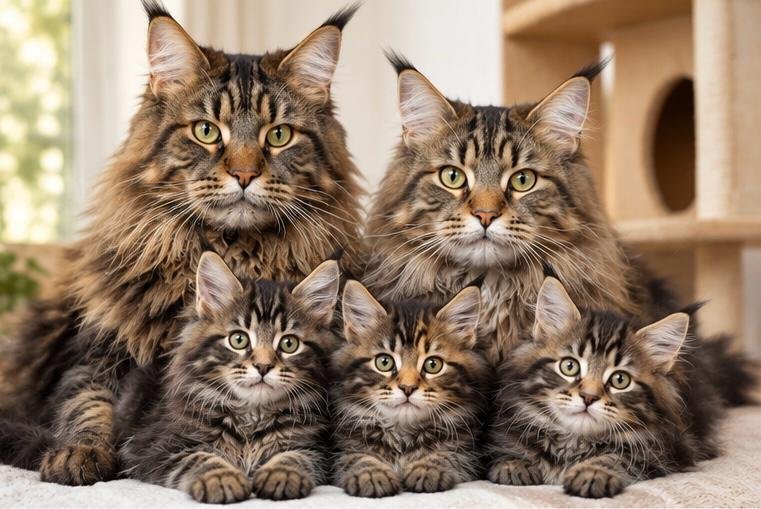
2. Maine Coon Cat
The Maine Coon is one of the largest recognized domestic cat breeds. It is known for its sturdy body, long coat, tufted ears, and bushy tail.
Maine Coons are often friendly, curious, and playful, making them appealing companions for households that have enough space and time for an active cat.
Personality
Many Maine Coons enjoy interactive play and observing everyday family activities. Some are highly social, while others are more independent.
Their size means children should be taught to support their bodies properly and avoid carrying them without adult assistance.
Grooming Needs
Their long coats need regular brushing to prevent mats, particularly around the belly, hind legs, and tail.
Why Families Choose Maine Coons
- Often sociable and playful
- Intelligent and curious
- Can enjoy interactive toys and climbing structures
- Have a distinctive, impressive appearance
Maine Coons may suit active families who can provide enrichment and maintain their grooming routine.
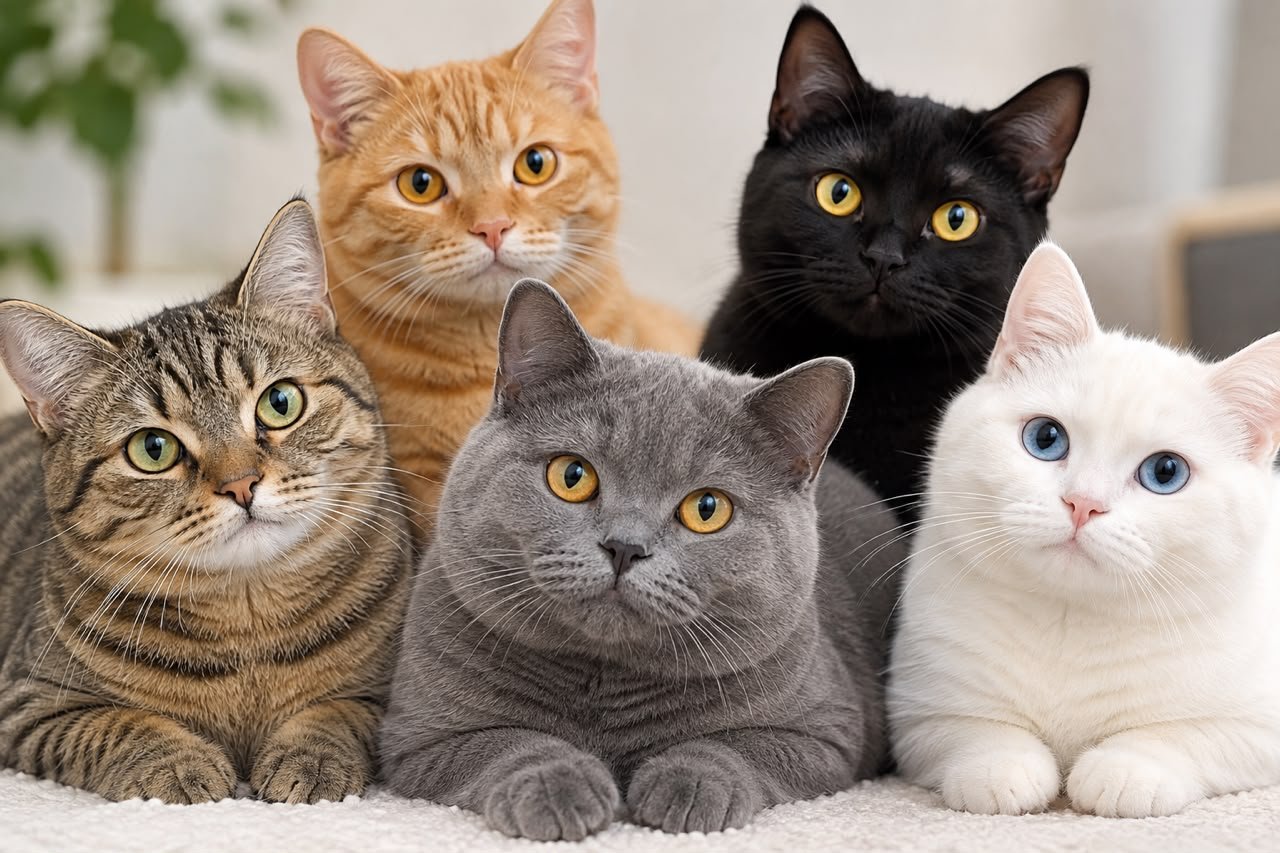
3. British Shorthair Cat
The British Shorthair is recognized for its round face, full cheeks, sturdy body, and dense, plush coat. Blue-gray is a well-known color, but the breed comes in many colors and patterns.
These cats are often calm and independent, making them an appealing option for families looking for a relaxed indoor companion.
Personality
British Shorthairs may enjoy sitting near family members without constantly seeking attention. Some like gentle petting but do not enjoy being carried or held for long periods.
Children should respect their boundaries and allow them to approach voluntarily.
Grooming Needs
Their short, dense coat usually requires brushing once or twice a week, with more frequent grooming during heavier shedding.
Why Families Choose British Shorthairs
- Often calm and adaptable
- Relatively simple coat maintenance
- Can suit apartment living
- May be comfortable with a predictable household routine
Regular play and portion control are important because these cats can be prone to weight gain.
4. American Shorthair Cat
The American Shorthair is a sturdy, adaptable breed with a short coat and a wide range of colors and patterns. Silver tabby markings are particularly recognizable.
These cats can make good family pets because many are playful without requiring constant attention.
Personality
American Shorthairs often enjoy toys, climbing opportunities, and time with their owners. Their independent nature may help them adapt to households with different daily routines.
However, every cat has individual preferences, and not all American Shorthairs have the same temperament.
Grooming Needs
Their short coat is relatively easy to maintain. Weekly brushing is often sufficient, although shedding patterns vary.
Why Families Choose American Shorthairs
- Adaptable to many home environments
- Often playful and independent
- Short coat with manageable grooming needs
- Can be suitable for first-time cat owners
They benefit from daily play, a balanced diet, and routine veterinary examinations.
5. Birman Cat
The Birman is known for its blue eyes, color-point coat, and distinctive white paws. Its semi-long fur gives it an elegant appearance.
Birmans are often described as affectionate, gentle, and socially engaged.
Personality
Many Birmans enjoy being around their owners and participating in everyday household activities. They may appreciate attention without being as demanding as some highly vocal cats.
They can be a good option for families seeking a companion that enjoys social interaction.
Grooming Needs
Regular brushing helps keep the Birman’s coat clean and reduces loose fur. Its coat may be easier to maintain than that of some heavily coated long-haired cats, although individual needs vary.
Why Families Choose Birmans
- Often affectionate and people-oriented
- Attractive blue eyes and color-point markings
- Can enjoy indoor companionship
- May adapt well to gentle family routines
As with any cat, a Birman needs quiet resting areas and respectful handling.
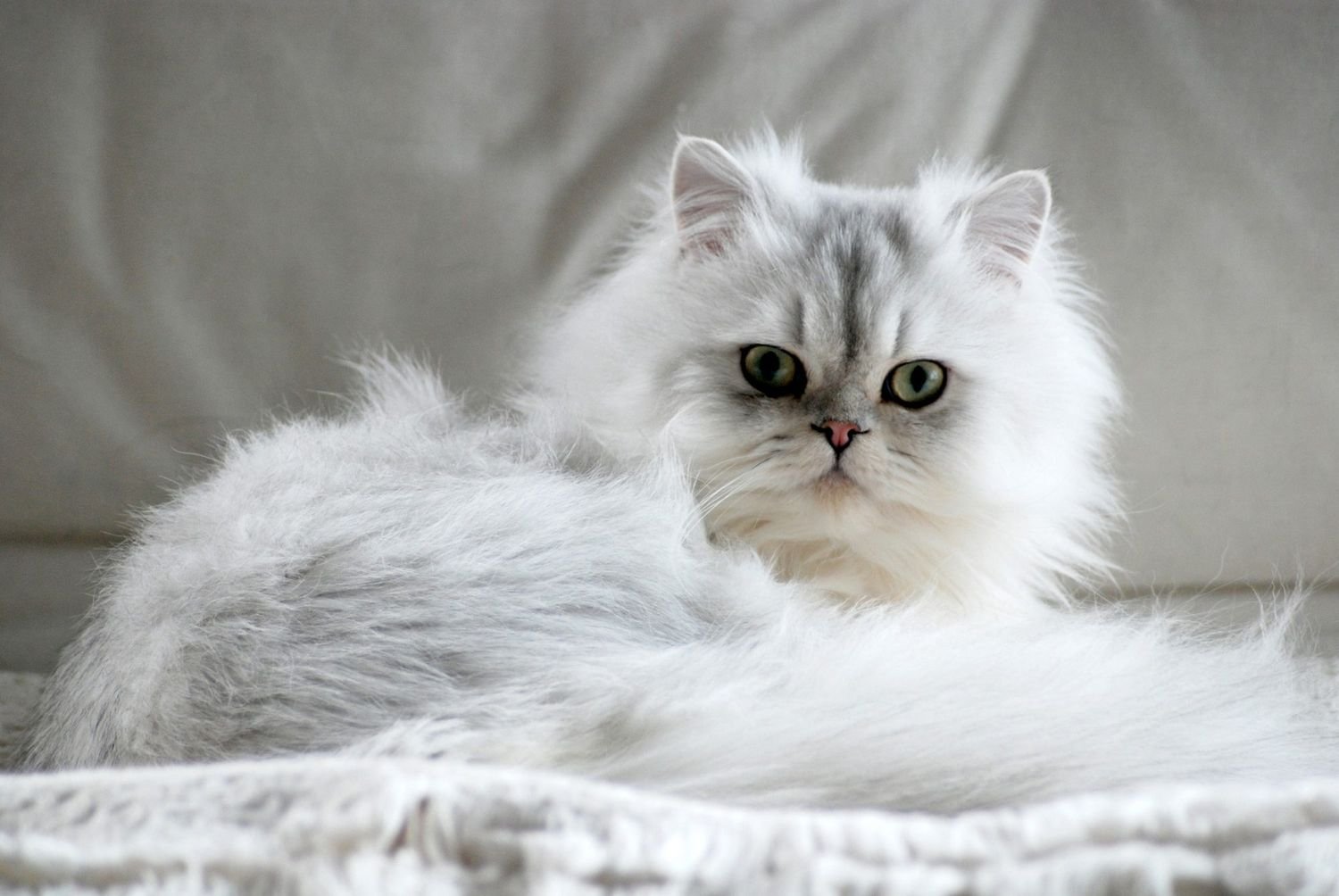
6. Persian Cat
Persian cats are known for their long, luxurious coats, round faces, and calm appearance. They may suit families that prefer a quieter companion rather than a highly energetic playmate.
Personality
Many Persians enjoy peaceful environments and gentle attention. They may not appreciate rough play or noisy interactions, so they are often better suited to children who understand how to respect a pet’s space.
Grooming Needs
Persian cats require substantial grooming. Their long coats need frequent, often daily, brushing to reduce tangles and mats.
Flat-faced Persians may also need additional attention to facial cleanliness and breathing-related health concerns. Prospective owners should discuss breed-related risks with a veterinarian or responsible breeder.
Why Families Choose Persians
- Often calm and gentle
- Luxurious long coats
- Can enjoy relaxed indoor lifestyles
- May suit quieter households
Families should be prepared for the Persian’s grooming needs and potential veterinary expenses.
7. Burmese Cat
Burmese cats have sleek, short coats, expressive eyes, and muscular bodies. They are often described as affectionate, playful, and highly people-oriented.
Personality
Many Burmese cats enjoy interactive play and close companionship. They may follow family members around the home and seek attention throughout the day.
They can suit families that have plenty of time to interact with their pets.
Grooming Needs
Their short coats generally need only occasional brushing to remove loose hair and maintain a healthy appearance.
Why Families Choose Burmese Cats
- Often affectionate and outgoing
- Enjoy interactive games
- Relatively easy coat maintenance
- Can be engaging companions for older children
Burmese cats may become bored or lonely without sufficient attention, so enrichment is especially important.
8. Siamese Cat
The Siamese is a distinctive short-haired breed with a slender body, blue eyes, and darker color-point markings on the face, ears, paws, and tail.
These cats are often intelligent, active, vocal, and socially engaged.
Personality
Siamese cats frequently enjoy companionship and interactive play. They may communicate with their owners through frequent vocalizations.
They can be a good match for families that enjoy spending time with an energetic, expressive pet.
Grooming Needs
Their short coat generally requires little maintenance beyond occasional brushing.
Why Families Choose Siamese Cats
- Often highly interactive
- Intelligent and curious
- Enjoy toys and training activities
- Relatively low-maintenance coats
Families should consider whether they can meet the Siamese cat’s social and activity needs before adopting one.
9. Exotic Shorthair Cat
The Exotic Shorthair has a rounded face, large eyes, compact body, and dense, plush coat. It shares some physical characteristics with the Persian but generally has a shorter coat.
Personality
Many Exotic Shorthairs are gentle and enjoy calm companionship. They may appreciate short play sessions followed by long periods of rest.
Their suitability for children depends on the individual cat and the family’s ability to provide gentle handling.
Grooming Needs
The coat generally requires regular brushing, although it is easier to maintain than the Persian’s long coat. Facial folds may need cleaning, and flat-faced individuals can have additional health considerations.
Why Families Choose Exotic Shorthairs
- Often relaxed and affectionate
- Plush coat with moderate grooming requirements
- Can suit indoor living
- May enjoy a quieter household
Choose a healthy individual from a responsible source and ask about breed-related health screening.
10. Domestic Shorthair Cat
Domestic Shorthair cats are among the most common companion cats. Unlike pedigree breeds, the term describes short-coated cats with mixed or unknown ancestry.
They come in a wide range of colors, sizes, and personalities.
Personality
A Domestic Shorthair may be playful, cuddly, independent, shy, or outgoing. Because individual temperaments vary, meeting the cat before adoption can help you find a suitable family companion.
Adult cats in shelters may already have established personalities, making it easier to assess their comfort around children and other pets.
Grooming Needs
Most Domestic Shorthairs need only occasional or weekly brushing, depending on their coat and shedding patterns.
Why Families Choose Domestic Shorthairs
- Wide variety of personalities
- Usually manageable grooming needs
- Available through many shelters and rescue organizations
- Can make wonderful companions for children and adults
Adopting a Domestic Shorthair can be an excellent option for families who want to give a cat a loving home.
Comparison of the Best Family Cat Breeds
| Cat Breed | Typical Temperament | Grooming Needs | Activity Level |
|---|---|---|---|
| Ragdoll | Often gentle and affectionate | Moderate | Moderate |
| Maine Coon | Often friendly and playful | Moderate to high | Moderate to high |
| British Shorthair | Often calm and independent | Low to moderate | Low to moderate |
| American Shorthair | Often adaptable and playful | Low | Moderate |
| Birman | Often affectionate and sociable | Moderate | Moderate |
| Persian | Often calm and relaxed | High | Low to moderate |
| Burmese | Often social and playful | Low | High |
| Siamese | Often vocal and interactive | Low | High |
| Exotic Shorthair | Often relaxed and affectionate | Moderate | Low to moderate |
| Domestic Shorthair | Varies by individual | Usually low | Varies |
These descriptions are general tendencies, not guarantees. Individual temperament, socialization, age, and previous experiences are important when selecting a family pet.
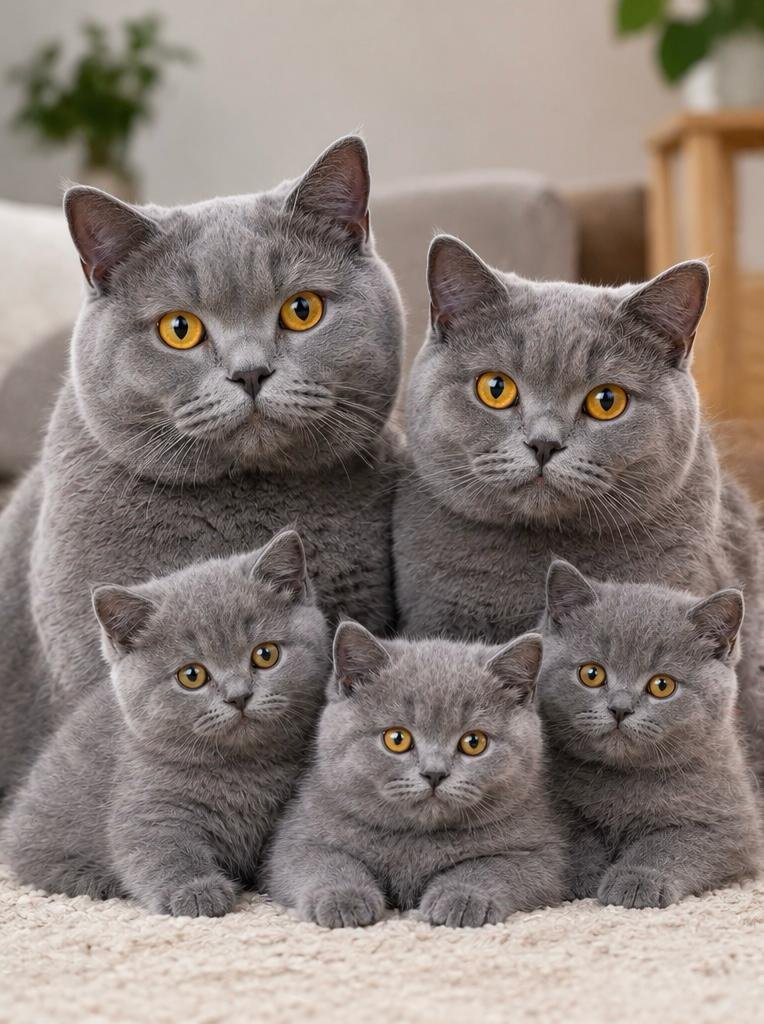
How to Choose the Right Cat for Your Family
Choosing a family cat involves more than appearance or breed popularity. Consider your household routine, children’s ages, living space, budget, and willingness to provide long-term care.
Consider Your Children’s Ages
Young children need close supervision around cats. Teach them not to pull tails, chase cats, disturb sleeping pets, or force interactions.
Older children may be able to help with feeding, brushing, and interactive play under adult supervision.
Think About Grooming Requirements
Short-haired cats generally require less coat maintenance than long-haired breeds. If your family has limited time for grooming, an American Shorthair or suitable Domestic Shorthair may be more manageable than a Persian.
Evaluate Energy Levels
Active cats need regular play, climbing spaces, and mental stimulation. Calmer cats may prefer predictable routines and quiet resting places.
Choose a cat whose energy level fits your household rather than expecting the cat to change its natural temperament.
Consider Adoption
Animal shelters and rescue organizations often have kittens and adult cats looking for homes.
Ask about the cat’s medical history, observed behavior, vaccination status, and experience with children or other animals. An adult cat with a known temperament may be a particularly good choice for some families.
Plan for Long-Term Costs
Your budget should include food, litter, preventive veterinary care, vaccinations, parasite prevention, grooming supplies, and unexpected medical expenses.
Owning a cat is a long-term responsibility that may continue for 15 years or more.
Essential Care Tips for Family Cats
Regardless of breed, all cats need a safe environment and consistent care.
1. Provide balanced nutrition: Choose complete cat food appropriate for your pet’s age and health.
2. Keep fresh water available: Clean water supports hydration and general health.
3. Schedule veterinary visits: Routine examinations, vaccinations, dental care, and parasite prevention are important.
4. Offer daily enrichment: Use toys, scratching posts, climbing structures, and puzzle feeders to encourage natural behavior.
5. Maintain a clean litter box: Place it in an accessible, quiet location and clean it regularly.
6. Create safe resting areas: Cats need quiet spaces where they can retreat when they feel tired or overwhelmed.
7. Supervise interactions with children: Encourage gentle handling and respect for the cat’s boundaries.
8. Consider identification and sterilization: Discuss microchipping, spaying, or neutering with your veterinarian.
With proper care, a family cat can enjoy a comfortable life while becoming a valued member of the household.
Are Family Cat Breeds Good with Other Pets?
Many cats can live successfully with other cats or even dogs, but compatibility depends on the individual animals.
Introduce pets gradually, provide separate food and water stations, and ensure each animal has a safe resting place. Avoid forcing interactions.
Some cats enjoy living with another companion, while others prefer being the only pet. A slow introduction and close supervision can improve the chances of a peaceful household.
Frequently Asked Questions (FAQs)
1. What is the best cat breed for families?
Ragdolls, Maine Coons, American Shorthairs, British Shorthairs, and Birmans are popular family cat choices. However, the best option depends on your household and the individual cat’s temperament.
2. Which cat breeds are best for children?
Cats that are comfortable with gentle handling and regular household activity may suit families with children. Ragdolls and American Shorthairs are commonly considered, but individual behavior matters more than breed alone.
3. What is the friendliest cat breed?
Ragdolls, Burmese, Birmans, and Maine Coons are often described as sociable or affectionate. However, friendliness varies between individual cats, even within the same breed.
4. Are short-haired cats better for families?
Short-haired cats often require less brushing than long-haired cats, which can make coat maintenance easier. Their suitability for families still depends on temperament, activity level, and socialization.
5. Are long-haired cats good family pets?
Yes. Long-haired cats such as Ragdolls and Maine Coons can make excellent family companions. Families should be prepared for their regular grooming requirements.
6. What is the calmest cat breed for families?
British Shorthairs and Persians are often described as relatively calm. However, every cat is different, and a quiet adult cat with a known temperament may be a better match than choosing by breed alone.
7. Are cats safe around babies and toddlers?
Cats can live in households with babies and toddlers, but interactions must always be closely supervised. Never leave a young child alone with a cat, and provide the cat with places to escape and rest.
8. Which cat is best for first-time owners?
A friendly, adaptable adult Domestic Shorthair or American Shorthair may suit many first-time owners. Choose a cat whose care needs and personality fit your lifestyle.
9. How long do family cats live?
Many domestic cats live approximately 12–18 years, and some live longer. Good nutrition, preventive veterinary care, a safe environment, and healthy body weight can support a longer life.
10. Do family cats need a lot of grooming?
Grooming requirements depend on coat length and texture. Short-haired cats usually need less brushing, while long-haired breeds may require frequent or daily grooming to prevent mats.
11. Can family cats live in apartments?
Yes. Many cats can thrive in apartments if they have enough space for climbing, playing, resting, and using a clean litter box. Indoor enrichment is important for their physical and mental well-being.https://www.aspca.org/pet-care/cat-care?utm_source=chatgpt.com
12. Should I adopt a kitten or an adult cat for my family?
Both can be good choices. Kittens need more supervision, socialization, and training, while adult cats may have more predictable personalities. A shelter can help you identify a cat that suits your household.
Conclusion
Choosing the best family cat breed depends on your family’s lifestyle, living environment, grooming preferences, and expectations for companionship. Ragdolls, Maine Coons, British Shorthairs, American Shorthairs, Birmans, and Domestic Shorthair cats are all worth considering, depending on the individual animal and your household needs.
Some cats are playful and energetic, while others prefer a calm environment and gentle affection. Understanding these differences can help you select a companion that fits comfortably into your family.
Remember that every cat needs balanced nutrition, regular veterinary care, daily enrichment, and a safe place to rest. Children should also learn to handle pets gently and respect their boundaries.
Whether you adopt a friendly shelter cat or choose a recognized pedigree breed, the right feline companion can bring affection, entertainment, and lasting companionship to your home. With responsible care and patience, your family cat can become a cherished member of the household for many years.
SEO Details
SEO Title: 10 Best Family Cat Breeds: Friendly Cats for Kids
Focus Keyword: Family Cat Breeds
Permalink: family-cat-breeds
Meta Description: Discover the 10 best family cat breeds, including friendly, kid-friendly cats, their personalities, grooming needs, care tips, and FAQs.
LSI Keywords Included
- Best family cat breeds
- Family-friendly cats
- Kid-friendly cat breeds
- Best cats for children
- Friendly cat breeds
- Cats for families with kids
- Best indoor cats for families
- Calm cat breeds
- Affectionate cat breeds
- Ragdoll cat personality
- Maine Coon family pet
- British Shorthair temperament
- American Shorthair cat
- Low-maintenance cats
- Best cats for first-time owners
- Cat grooming and care
- Domestic Shorthair cat adoption
- Cats that get along with children
- Family pet care tips
- Indoor cat breeds
SEO tip: Apne article ke saath relevant cat images add karein, aur alt text mein natural phrases use karein, jaise friendly Ragdoll cat with family ya best family cat breeds. Focus keyword ko title, introduction, relevant heading aur conclusion mein naturally use karein.