

Large cat breeds are admired for their impressive size, beautiful coats, muscular bodies, and affectionate personalities. Some of these cats look majestic because of their long fur and bushy tails, while others have powerful bodies and athletic builds. Despite their size, many large domestic cats can be gentle, playful, and loving companions.
Popular large cat breeds include the Maine Coon, Norwegian Forest Cat, Ragdoll, Siberian, Bengal, and British Shorthair. These cats vary in weight, body structure, temperament, grooming requirements, and activity levels. Some are energetic climbers, while others prefer relaxing indoors with their families.
If you are considering adopting a large house cat, it is important to understand its expected size, nutritional needs, exercise requirements, grooming routine, and potential health concerns. Large cats may need more space, sturdy climbing furniture, and carefully managed portions to maintain a healthy body weight.
In this guide, we will explore the 10 most popular large cat breeds, their physical characteristics, personalities, average lifespans, and essential care tips to help you choose the right feline companion.
What Are Large Cat Breeds?
Large cat breeds are domestic cat breeds that generally grow bigger or heavier than the average house cat. They may have long bodies, broad chests, muscular frames, large paws, or thick coats that make them appear even bigger.
Many ordinary domestic cats weigh approximately 8–12 pounds (3.6–5.4 kg), although healthy weights vary considerably. Some large cat breeds can weigh 15–25 pounds (6.8–11.3 kg) or more, depending on their sex, frame, and genetics.
It is important to distinguish a naturally large cat from an overweight cat. A healthy large breed should have an appropriate body condition, visible waist when viewed from above, and ribs that can be felt without excessive pressure.
Large domestic cats are not all the same. Some breeds are recognized for their impressive height and length, while others are known for their heavy bones, dense coats, or muscular bodies.
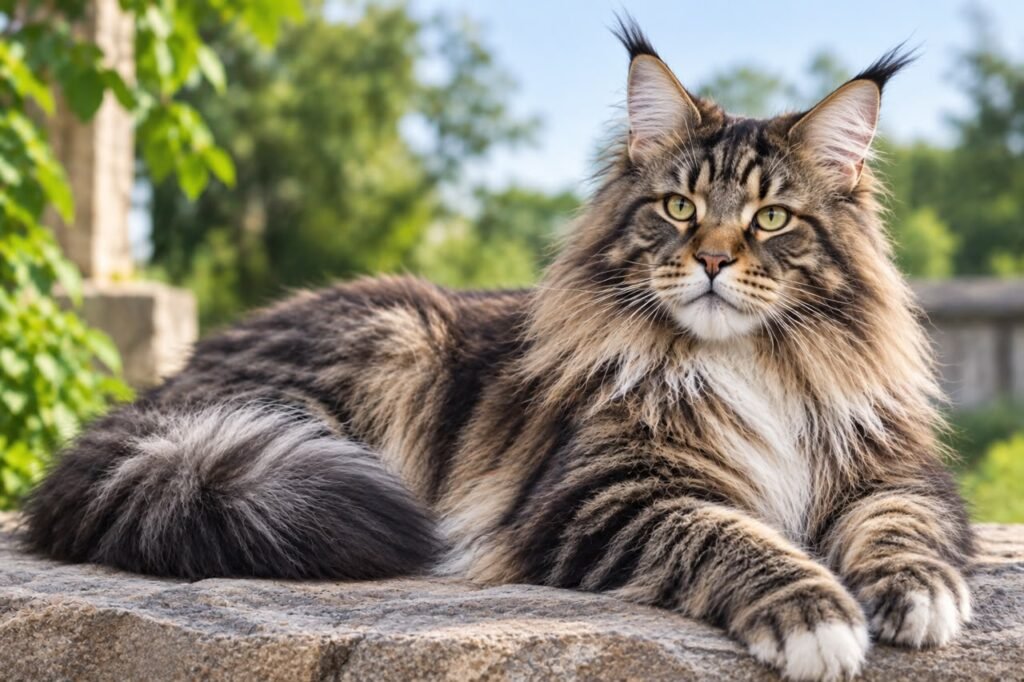
1. Maine Coon
The Maine Coon is one of the most famous large domestic cat breeds. It is known for its long body, broad chest, tufted ears, large paws, and bushy tail. Its thick coat gives it a rugged appearance that suits its origins in cold climates.
Size and Weight
Adult Maine Coons often weigh approximately 10–18 pounds (4.5–8.2 kg), although some individuals may be larger. Males are generally heavier than females.
They also have long bodies and may take several years to reach full physical maturity.
Personality
Maine Coons are often friendly, intelligent, curious, and playful. Many enjoy following their owners around the house and participating in family activities.
They can be affectionate without always demanding to sit on someone’s lap. Individual personalities vary, so not every Maine Coon behaves in the same way.
Grooming and Care
Their semi-long coats benefit from regular brushing, especially around the belly, hind legs, and tail. Daily play, climbing structures, and a balanced diet help maintain their health.
Best for: Families and owners who want a large, social, and playful companion.
2. Norwegian Forest Cat
The Norwegian Forest Cat is a large, sturdy breed with a thick double coat, tufted ears, and a long, bushy tail. Its appearance is well suited to cold weather.
Size and Weight
Many adult Norwegian Forest Cats weigh around 8–18 pounds (3.6–8.2 kg), with males often larger than females.
Their thick fur can make them appear heavier than they actually are.
Personality
These cats are often independent, gentle, and curious. They may enjoy climbing, exploring, and observing household activities from elevated places.
They can be affectionate with their families while still appreciating personal space.
Grooming and Care
Regular brushing helps manage loose fur and prevent tangles, particularly during seasonal shedding. A tall, stable cat tree can provide valuable climbing opportunities.
Best for: Owners who enjoy an independent but affectionate cat with a thick coat.
3. Ragdoll
The Ragdoll is a large, semi-longhaired cat known for its blue eyes, color-point markings, and soft coat. Its relaxed appearance and affectionate nature have made it a popular companion.
Size and Weight
Adult Ragdolls commonly weigh around 10–20 pounds (4.5–9.1 kg), although healthy weights vary between individuals.
They have broad bodies and substantial bone structure, which contributes to their large appearance.
Personality
Ragdolls are often sociable, gentle, and people-oriented. Many enjoy staying close to their owners and participating in quiet family activities.
They can be suitable for households that provide companionship and gentle handling.
Grooming and Care
Their coats need brushing several times a week to remove loose hair and reduce tangles. Routine dental care, veterinary examinations, and appropriate feeding are also important.
Best for: Families seeking a large, affectionate indoor cat.
4. Siberian Cat
The Siberian is a powerful, medium-to-large or large domestic cat breed with a thick coat, rounded features, and a muscular body. Its dense fur helps it tolerate cold weather.
Size and Weight
Adult Siberian cats often weigh approximately 8–17 pounds (3.6–7.7 kg), although some may fall outside this range.
Their dense coat and sturdy frame contribute to their impressive appearance.
Personality
Siberian cats are often playful, curious, and affectionate. Many enjoy climbing, interactive toys, and spending time with family members.
They may remain playful well into adulthood and benefit from regular mental stimulation.
Grooming and Care
Their thick coat requires consistent brushing, especially during seasonal coat changes. A complete diet and opportunities for exercise help maintain healthy muscles and body condition.
Best for: Active households that can provide play, climbing space, and regular grooming.
5. Bengal Cat
The Bengal is a muscular, athletic cat with a distinctive spotted or marbled coat. Its markings resemble those of wild cats, but the domestic Bengal is a companion animal.
Size and Weight
Adult Bengals commonly weigh around 8–15 pounds (3.6–6.8 kg). Their muscular bodies and athletic posture can make them look larger than their weight suggests.
Personality
Bengals are often energetic, intelligent, and curious. They may enjoy climbing, chasing toys, learning tricks, and exploring their surroundings.
They usually need more activity and mental enrichment than a very relaxed companion cat.
Grooming and Care
Their short coat is relatively easy to maintain, with occasional brushing often sufficient. However, their exercise and enrichment needs can be substantial.
Best for: Active owners who can provide interactive play and a stimulating indoor environment.
6. British Shorthair
The British Shorthair is a sturdy cat with a broad chest, round face, full cheeks, and dense plush fur. Although it may not be as long as the Maine Coon, its heavy build gives it a substantial appearance.
Size and Weight
Adult British Shorthairs often weigh around 7–17 pounds (3.2–7.7 kg), with males generally larger than females.
Their round shape should not be confused with excess body fat.
Personality
British Shorthairs are often calm, independent, and adaptable. Many enjoy relaxing near their owners but may prefer not to be carried frequently.
They can suit quieter households and families that respect a cat’s personal space.
Grooming and Care
Their dense short coat usually requires brushing once or twice a week. Because some British Shorthairs are less active, portion control and regular play are particularly important.
Best for: Owners looking for a sturdy, calm, and relatively low-maintenance cat.
7. Turkish Van
The Turkish Van is an athletic cat known for its semi-long coat, broad body, and distinctive color pattern, often featuring a mostly white body with colored markings on the head and tail.
Size and Weight
Adult Turkish Vans often weigh around 7–18 pounds (3.2–8.2 kg), although individual sizes vary.
They have strong bodies and powerful hind legs that support their jumping ability.
Personality
Turkish Vans are often energetic, curious, and independent. Some enjoy water-related activities, although this preference is not universal.
They benefit from climbing opportunities, interactive toys, and activities that encourage exploration.
Grooming and Care
Their coat requires regular brushing, particularly during seasonal shedding. Daily enrichment and safe climbing spaces can help meet their physical needs.
Best for: Active owners who want an athletic and adventurous cat.
8. Savannah Cat
The Savannah cat is a tall, long-legged domestic cat with large ears and a spotted coat. It results from ancestry involving domestic cats and the serval, a wild African cat.
Size and Weight
Savannah cats vary significantly in size depending on their generation and ancestry. Some can be much taller and heavier than typical domestic cats.
Early-generation Savannahs may have specialized care, housing, legal, and behavioral requirements. They should not be treated as equivalent to ordinary domestic cat breeds.
Personality
Savannah cats are often described as energetic, curious, and highly active. Their needs can exceed those of many traditional companion cats.
Grooming and Care
Their short coats usually require limited grooming, but their physical and behavioral enrichment needs can be demanding.
Prospective owners should investigate local ownership laws, generation-specific needs, and responsible breeding practices before considering a Savannah.
Best for: Experienced owners who understand the breed’s specialized needs and legal considerations.
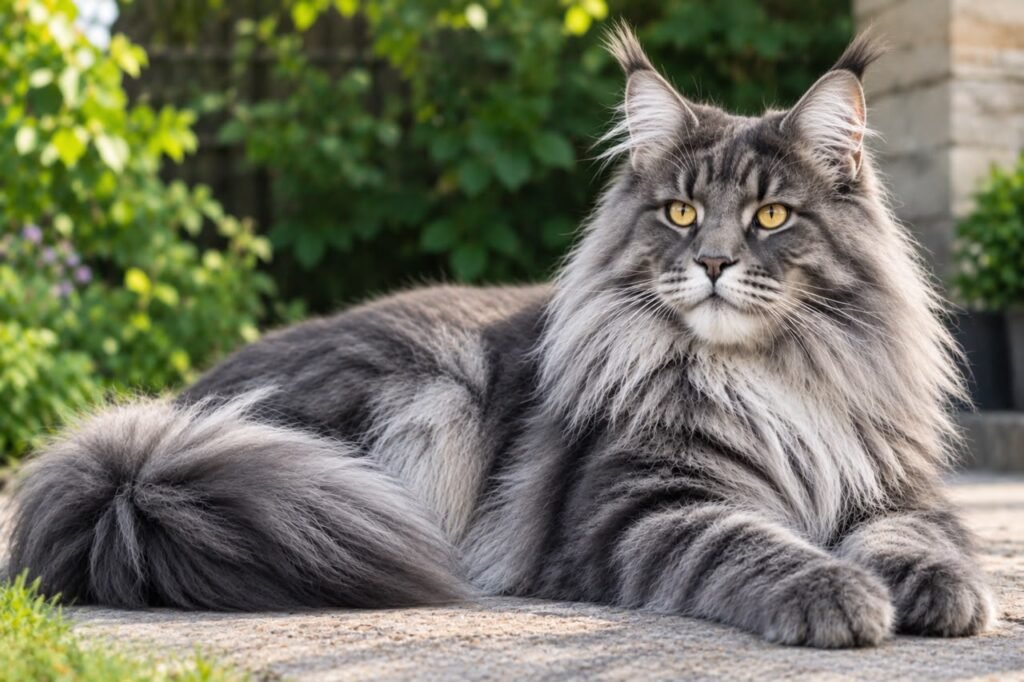
9. Chartreux
The Chartreux is a muscular cat with a dense blue-gray coat, rounded head, and copper or gold eyes. Although it is not always among the heaviest cat breeds, its solid body makes it appear substantial.
Size and Weight
Adult Chartreux cats commonly weigh around 6–16 pounds (2.7–7.3 kg), depending on sex and individual build.
Personality
Chartreux cats are often gentle, observant, and adaptable. They may enjoy interactive play but can also be content relaxing in a familiar environment.
Their personalities vary, and individual socialization influences how comfortable they feel around visitors and other pets.
Grooming and Care
Their dense coat benefits from regular brushing, especially during seasonal shedding. They also need balanced nutrition, exercise, and routine veterinary care.
Best for: Owners who prefer a sturdy cat with a plush coat and a generally calm reputation.
10. Chausie
The Chausie is a large, athletic domestic cat breed developed from domestic cats and jungle cat ancestry. It has long legs, a lean muscular body, and a short coat.
Size and Weight
Adult Chausies often weigh around 8–16 pounds (3.6–7.3 kg), although size varies between individuals.
Their long legs and athletic proportions contribute to their tall appearance.
Personality
Chausies are often active, intelligent, and curious. They may need considerable play, climbing opportunities, and mental stimulation.
They are not necessarily the best choice for owners seeking a low-energy lap cat.
Grooming and Care
Their short coats are relatively easy to maintain. However, their activity levels and dietary needs may require more attention than those of a typical domestic cat.
Ask a veterinarian or responsible breeder about breed-specific health considerations and appropriate nutrition.
Best for: Experienced owners who can meet the needs of a highly active companion.
Large Cat Breeds Comparison Table
The following table provides a general comparison of popular large domestic cats. Weight ranges are approximate and can vary by sex, genetics, and individual body condition.
| Cat Breed | Approximate Adult Weight | Coat Type | Activity Level |
|---|---|---|---|
| Maine Coon | 10–18 lb | Semi-long | Moderate to high |
| Norwegian Forest Cat | 8–18 lb | Long, dense | Moderate |
| Ragdoll | 10–20 lb | Semi-long | Moderate |
| Siberian | 8–17 lb | Long, dense | Moderate to high |
| Bengal | 8–15 lb | Short | High |
| British Shorthair | 7–17 lb | Short, dense | Low to moderate |
| Turkish Van | 7–18 lb | Semi-long | High |
| Savannah | Highly variable | Short | High |
| Chartreux | 6–16 lb | Short, dense | Moderate |
| Chausie | 8–16 lb | Short | High |
These figures are general estimates, not ideal weight targets for every cat. Your veterinarian can help determine a healthy weight based on body structure and condition.
How Big Can Domestic Cats Get?
Large domestic cats can grow considerably bigger than the average house cat. Certain breeds, particularly Maine Coons and Ragdolls, may weigh well over 15 pounds while maintaining a healthy body condition.
However, weight alone does not determine which cat is the biggest. Body length, shoulder height, bone structure, and overall proportions also matter.
Some cats are naturally long and lean, while others have broad chests and heavy frames. A thick coat can also make a cat look larger than it is.
It is important not to overfeed a cat in an attempt to make it bigger. Healthy growth should be supported through appropriate nutrition, not excessive calories.
Large Cat Breeds Personality and Temperament
Large cat breeds have different personalities, despite their impressive size. Some are social and affectionate, while others are independent or highly energetic.
Affectionate Large Cats
Ragdolls and many Maine Coons are often described as affectionate and people-oriented. They may enjoy sitting beside family members or following them around the home.
Active and Playful Large Cats
Bengals, Savannahs, and Chausies often need more activity and mental stimulation. Climbing structures, puzzle feeders, and interactive toys can help meet their needs.
Calm Large Cats
British Shorthairs and some Chartreux cats may suit quieter households. They can enjoy companionship without requiring constant attention.
Remember that breed descriptions are general tendencies. An individual cat’s socialization, experiences, and temperament are important when choosing a pet.
Large Cat Breeds Grooming Requirements
Grooming needs depend more on coat type than body size. A large long-haired cat usually requires more brushing than a large short-haired cat.
Long-Haired Large Cats
Maine Coons, Norwegian Forest Cats, Ragdolls, and Siberians benefit from regular brushing, often several times a week. Cats whose fur tangles easily may need daily attention.
Pay special attention to the belly, hind legs, armpits, and tail, where mats can form.
Short-Haired Large Cats
Bengals, British Shorthairs, and Chausies generally require less coat maintenance. Weekly brushing may be sufficient for many individuals, although shedding patterns vary.
Other Grooming Needs
All large cats benefit from regular nail checks, dental care, and monitoring of their skin and ears. Provide scratching posts that are sturdy enough to accommodate the cat’s size and strength.
Never cut tight mats with scissors near the skin. A veterinarian or experienced groomer can help remove severe matting safely.
Large Cat Breeds Diet and Nutrition
Large cat breeds need a complete and balanced diet that supports muscle development, healthy bones, skin, and coat condition.
A cat’s nutritional requirements depend on age, body condition, activity level, and health. Large size alone does not mean a cat needs unlimited food.
High-Quality Protein
Cats are obligate carnivores and require nutrients supplied through an appropriate feline diet. Choose complete cat food that provides suitable animal protein, essential amino acids, fats, vitamins, and minerals.
Portion Control
Follow the feeding guidelines on your cat’s food packaging as a starting point, and adjust portions based on body condition and veterinary advice.
Large cats can become overweight if they consume more calories than they use. Obesity increases the risk of diabetes, joint problems, and other health concerns.
Fresh Water
Always provide clean drinking water. Some cats drink more readily from a fountain, while others prefer a wide, shallow bowl.
Kitten Nutrition
Large-breed kittens need nutrition appropriate for growth. Do not give supplements or alter calcium levels without veterinary guidance, as excessive supplementation can be harmful.
Your veterinarian can recommend an appropriate diet and feeding schedule for your cat’s individual needs.
Common Health Problems in Large Cat Breeds
Large domestic cats can experience many of the same health conditions as other cats. Certain pedigree breeds may also have inherited risks.
Hypertrophic Cardiomyopathy
Hypertrophic cardiomyopathy (HCM) is a heart condition in which the heart muscle becomes abnormally thick. It is a concern in several cat populations, including Maine Coons and Ragdolls.
Responsible breeders may use appropriate genetic testing and veterinary screening, but no single test eliminates every risk.
Joint and Mobility Problems
A large body can place additional demands on joints, particularly if a cat is overweight. Maintaining a healthy body condition and providing easy access to resting places can help support mobility.
Obesity
Overfeeding and insufficient exercise can cause weight gain. Regular play and portion control help maintain a healthy body condition.
Dental Disease
Plaque and tartar can cause gum inflammation and painful dental problems. Regular veterinary examinations and home dental care are important.
Kidney and Urinary Problems
Cats can develop kidney disease and lower urinary tract conditions. Changes in drinking, urination, appetite, or weight should be discussed with a veterinarian.
Straining to urinate while producing little or no urine is an emergency because urinary blockage can be life-threatening.
Preventive Veterinary Care
Schedule routine checkups, vaccinations, parasite prevention, and dental assessments according to veterinary recommendations.
If you are adopting a pedigree large cat, ask about its family health history and any recommended screening for breed-associated conditions.
Are Large Cat Breeds Good Family Pets?
Many large cat breeds can be excellent family companions. Maine Coons, Ragdolls, and suitable Domestic Shorthair cats may adapt well to family life when they receive appropriate care and respectful handling.
However, size does not automatically make a cat gentle or child-friendly. Children should never climb on cats, pull their tails, or force them to be held.
Provide secure resting areas where cats can retreat when they want quiet time. Supervise interactions between young children and pets, and teach children to recognize signs of stress.
Families should also consider the cost of food, litter, veterinary care, grooming, and durable cat furniture when adopting a large cat.
How to Care for a Large Domestic Cat
Large cats need many of the same things as smaller cats, but their size may affect the equipment and space they require.
- Provide sturdy furniture: Choose stable cat trees, scratching posts, and beds that can support your cat’s weight.
- Encourage daily activity: Use interactive toys, climbing structures, and puzzle feeders.
- Maintain a healthy weight: Measure food portions and monitor body condition.
- Keep the litter box accessible: Choose a box large enough for the cat to enter, turn around, and dig comfortably.
- Schedule regular veterinary visits: Preventive care supports long-term health.
- Maintain coat care: Brush according to your cat’s fur length and texture.
- Provide safe resting spaces: Ensure your cat has quiet areas away from household activity.
Large cats can live happily in apartments or houses when their needs for movement, enrichment, and comfort are met.
Frequently Asked Questions (FAQs)
1. What is the biggest domestic cat breed?
The Maine Coon is one of the largest recognized domestic cat breeds, known for its long body, substantial frame, and bushy tail. Savannah cats can also be exceptionally tall, particularly in some early generations.
2. What is the heaviest domestic cat breed?
Maine Coons are among the heaviest commonly recognized domestic cat breeds, although individual weights vary. A cat’s healthy weight depends on its body structure and condition, not simply on its breed.
3. How much do large cat breeds weigh?
Many large domestic cat breeds weigh approximately 10–20 pounds (4.5–9.1 kg), although some individuals weigh less or more. Sex, genetics, body structure, and health influence weight.
4. Are large cat breeds friendly?
Many large cat breeds are known for sociable or affectionate temperaments. Maine Coons and Ragdolls are popular examples, but friendliness varies between individual cats.
5. Which large cat breed is best for families?
Maine Coons and Ragdolls are often considered family-friendly options. British Shorthairs and suitable mixed-breed cats can also be good companions, depending on their individual temperament and the family’s lifestyle.
6. What is the best large indoor cat?
Ragdolls, Maine Coons, and British Shorthairs can adapt to indoor living when their physical and mental needs are met. The best choice depends on the cat’s energy level, grooming requirements, and personality.
7. Do large cat breeds need more food?
Not necessarily. Larger cats may require more calories than smaller cats, but their needs depend on activity level, age, metabolism, and body condition. Follow appropriate feeding guidance rather than feeding by size alone.
8. Do large cats need special grooming?
Grooming requirements depend mainly on coat length and texture. Long-haired breeds generally need more brushing, while short-haired large cats usually require less maintenance.
9. How long do large domestic cats live?
Many domestic cats live approximately 12–18 years, although life expectancy varies by breed, genetics, lifestyle, and health. Regular veterinary care and maintaining a healthy weight can support long-term well-being.
10. Are Maine Coons bigger than Ragdolls?
Maine Coons are generally known for their length and substantial frames, while Ragdolls also have large, sturdy bodies. There is considerable overlap in their sizes, so an individual cat of either breed may be larger than another.
11. Can large cat breeds live in small apartments?
Yes. Large cats can live in apartments if they have enough room to move, climb, play, and rest comfortably. Sturdy vertical climbing furniture and daily enrichment can help maximize limited space.
12. Are Savannah cats suitable for first-time owners?
Some Savannah cats may be challenging for inexperienced owners because of their high activity levels and specialized needs. Their generation, legal status, and individual temperament should be carefully considered before adoption.
Conclusion
Large cat breeds are impressive companions that combine beautiful appearances with a wide range of personalities. From the long-haired Maine Coon and Norwegian Forest Cat to the affectionate Ragdoll and athletic Bengal, there are many options for people who want a larger domestic cat.
However, choosing the right large house cat involves more than selecting the biggest breed. Consider the cat’s temperament, grooming requirements, activity level, health risks, and long-term care costs before making a decision.
Provide balanced nutrition, regular veterinary care, daily exercise, appropriate grooming, and sturdy furniture designed for your cat’s size. Maintaining a healthy body weight is especially important for large cats because excess weight can contribute to mobility and other health problems.
With responsible care and a suitable home environment, a large domestic cat can become a loving and rewarding companion for many years.

1 Comment
[…] Many older cats continue to enjoy play, although they may prefer gentler activities. Use low-impact toys and consult a veterinarian if your cat’s activity level changes […]