
Intelligent cat breeds are known for their curiosity, quick learning, problem-solving abilities, and playful personalities. Some cats can learn tricks, recognize their names, open simple doors, solve puzzle toys, and even learn to walk on a harness. Their intelligence makes them fascinating companions for people who enjoy interacting with their pets.
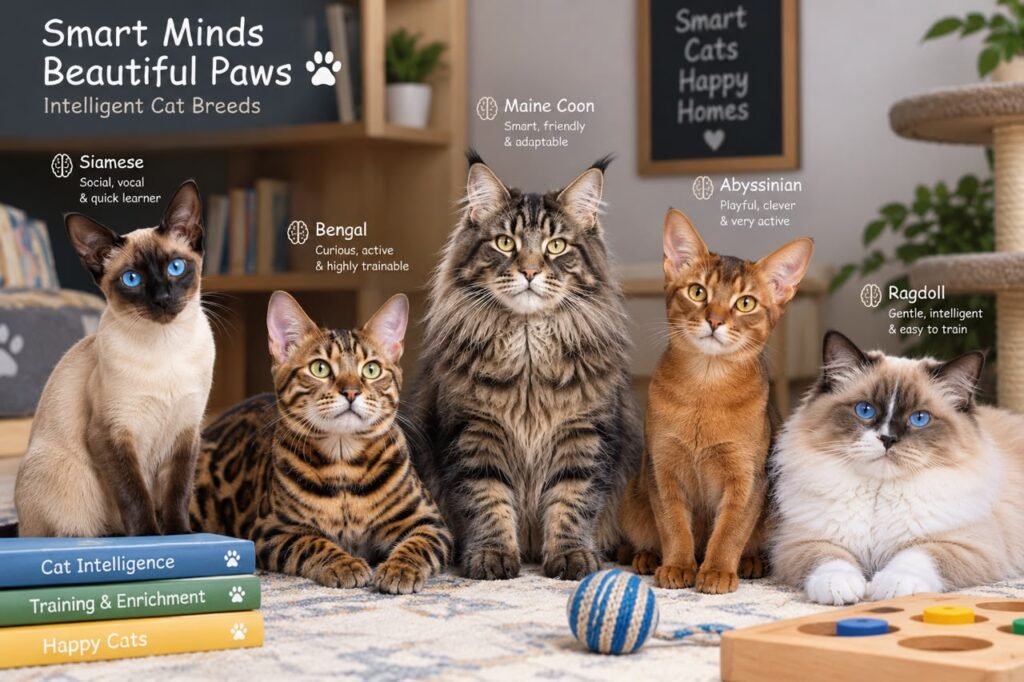
Although every cat has its own personality, certain breeds are often recognized for their high activity levels, curiosity, trainability, and social behavior. Popular intelligent cat breeds include the Siamese, Bengal, Abyssinian, Burmese, Maine Coon, and Turkish Angora.
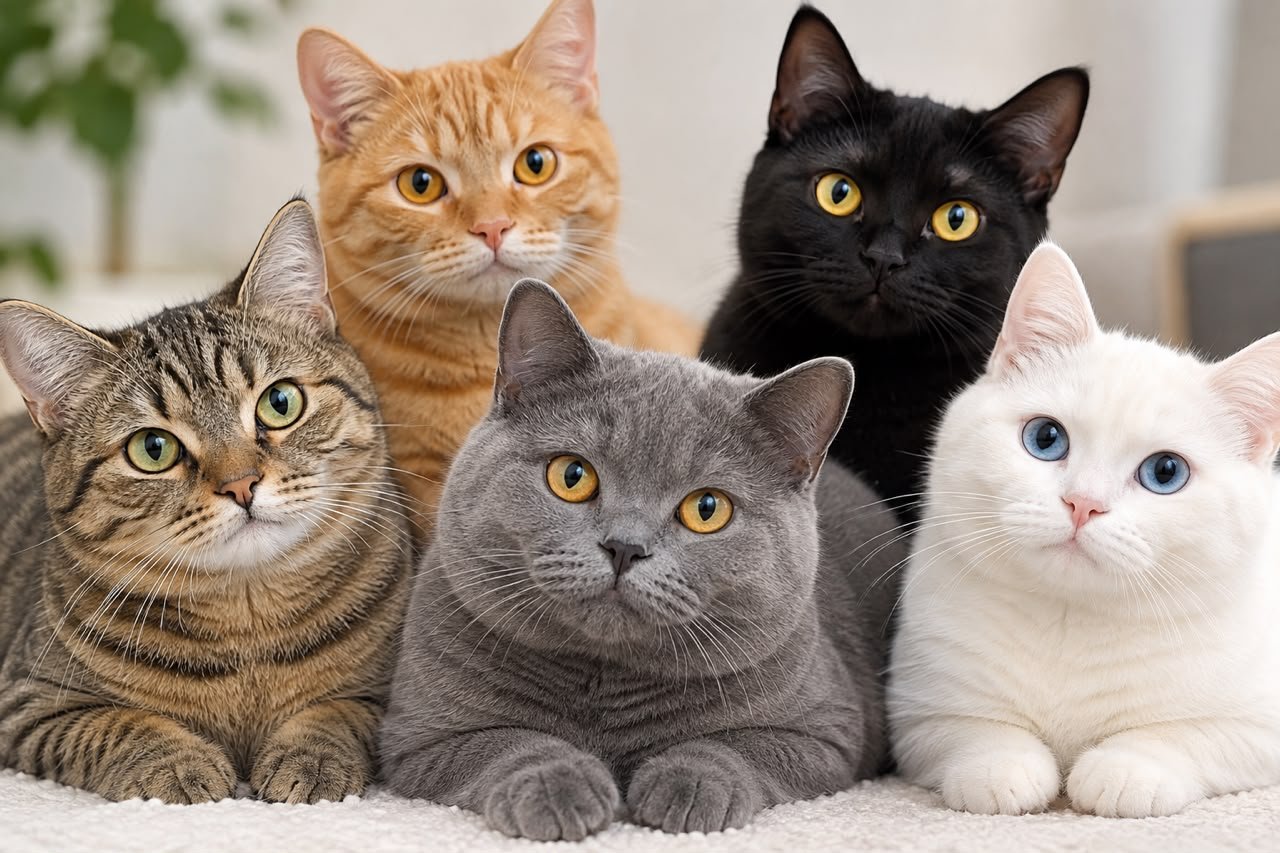
However, cat intelligence is not limited to pedigree breeds. Domestic Shorthair and Domestic Longhair cats can also be highly intelligent, especially when they receive positive socialization, mental stimulation, and opportunities to explore their surroundings.
In this guide, we will explore the smartest cat breeds, their personality traits, learning abilities, activity requirements, and care needs. You will also discover how to recognize feline intelligence and keep a smart cat mentally stimulated.
What Makes a Cat Intelligent?
Cat intelligence refers to a combination of learning, memory, problem-solving, communication, and the ability to adapt to new situations. Intelligent cats may learn household routines quickly, remember where their toys are kept, or discover how to access food puzzles.
Unlike dogs, cats often respond best to training that respects their independence and natural motivations. A cat may understand a command perfectly but choose not to follow it if the reward is not appealing.
Several behaviors may indicate that a cat is particularly clever.
- Problem-solving: Finding ways to reach toys, treats, or favorite resting places.
- Learning ability: Quickly learning routines, cues, or simple tricks.
- Memory: Remembering familiar people, locations, and daily schedules.
- Communication: Using different vocalizations and body language to communicate.
- Curiosity: Exploring new objects and investigating changes in the environment.
- Adaptability: Learning how to navigate new situations and surroundings.
Breed can influence behavioral tendencies, but intelligence varies between individual cats. Socialization, health, experience, and enrichment also play important roles.
1. Siamese Cat
The Siamese is widely recognized for its intelligence, vocal personality, and strong interest in human interaction. It has a slender body, blue eyes, short coat, and distinctive color-point markings.
Why Siamese Cats Are Intelligent
Siamese cats often learn household routines quickly and enjoy interactive activities. Some can learn to retrieve toys, respond to their names, or perform simple tricks using positive reinforcement.
They may also use vocalizations and body language to communicate their needs.
Personality and Behavior
Siamese cats are often social, energetic, curious, and affectionate. They may follow their owners around the home and investigate anything that attracts their attention.
Because they enjoy companionship, they can become bored when left without sufficient stimulation.
Care and Mental Stimulation
Provide puzzle feeders, interactive toys, climbing structures, and short training sessions. Reward desirable behavior with small treats or play.
Best for: Owners who want an active, social, and trainable companion.
2. Bengal Cat
The Bengal is an athletic cat known for its spotted or marbled coat, muscular body, and energetic personality. Its wild-looking appearance makes it particularly distinctive among domestic cat breeds.
Why Bengal Cats Are Intelligent
Bengals often enjoy investigating objects, solving food puzzles, and learning interactive games. Some can learn to retrieve toys, use target training, or walk on a harness when introduced gradually.
Their intelligence is closely associated with their curiosity and need for activity.
Personality and Behavior
Bengals are often playful, alert, and highly energetic. They may enjoy climbing tall cat trees, exploring secure environments, and interacting with their owners.
A bored Bengal may develop unwanted behaviors, such as excessive vocalization or scratching, if its enrichment needs are not met.
Care and Mental Stimulation
Offer daily interactive play, puzzle feeders, sturdy climbing structures, and opportunities to explore safely.
Best for: Experienced or active owners who can provide substantial physical and mental stimulation.
3. Abyssinian Cat
The Abyssinian is a sleek, athletic cat with a short ticked coat, large ears, and an alert expression. It is often considered one of the most curious and active domestic cat breeds.
Why Abyssinian Cats Are Intelligent
Abyssinians enjoy exploring their environment and learning through play. They may quickly discover how toys work, investigate new objects, and learn simple interactive routines.
Their curiosity can make training enjoyable when sessions are short and rewarding.
Personality and Behavior
These cats are often outgoing, playful, and energetic. Many prefer to stay involved in household activities rather than spend long periods alone.
They may enjoy climbing, chasing toys, and observing their surroundings from elevated positions.
Care and Mental Stimulation
Provide interactive toys, food puzzles, cat trees, and daily play sessions. Rotate toys regularly to maintain interest.
Best for: Families and owners who enjoy active cats with curious personalities.
4. Burmese Cat
The Burmese is a muscular, short-haired cat known for its expressive eyes, affectionate temperament, and interest in people.
Why Burmese Cats Are Intelligent
Burmese cats often learn household routines and interactive games quickly. They may enjoy clicker training, retrieving small toys, and exploring new activities.
Their social nature can make them particularly responsive to positive interaction with familiar people.
Personality and Behavior
Many Burmese cats are affectionate, playful, and people-oriented. They often enjoy companionship and may follow family members around the house.
They can become lonely or bored when their social and activity needs are neglected.
Care and Mental Stimulation
Use puzzle feeders, short training sessions, interactive play, and toys that encourage chasing and hunting behaviors.
Best for: Owners who want a social, affectionate, and engaging pet.
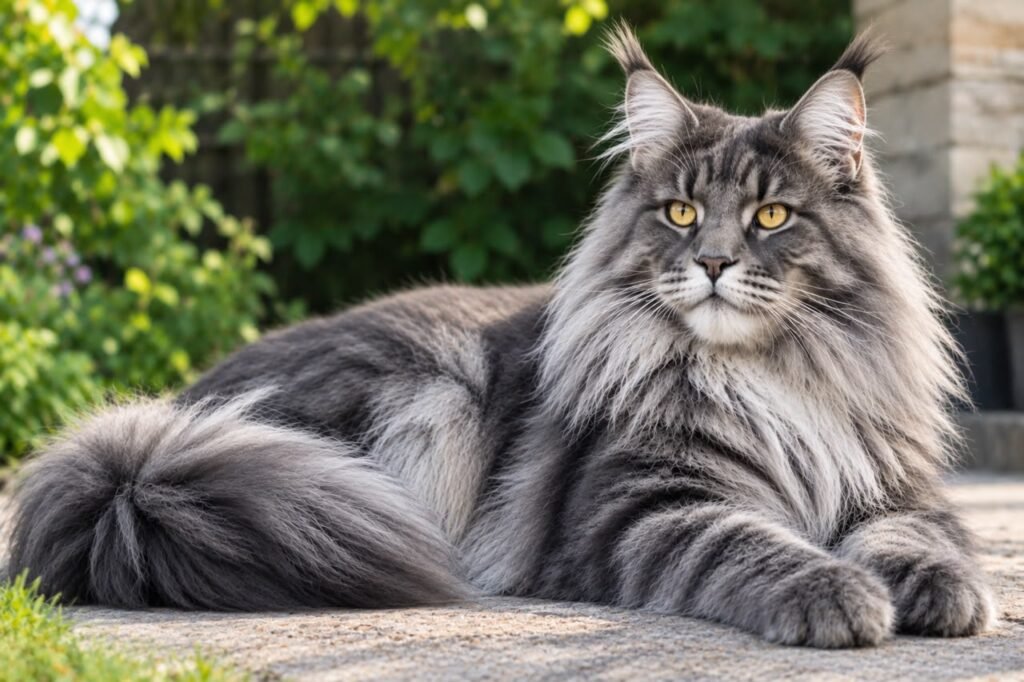
5. Maine Coon Cat
The Maine Coon is one of the largest domestic cat breeds. It is recognized for its long body, bushy tail, tufted ears, and friendly appearance.
Why Maine Coons Are Intelligent
Maine Coons are often curious and adaptable. Many learn household routines quickly and enjoy interactive games, food puzzles, and reward-based training.
Some can learn to retrieve toys or walk with a harness after gradual, positive introduction.
Personality and Behavior
Maine Coons are often friendly, playful, and sociable. Although they are large cats, many enjoy gentle interaction and observing family activities.
Their individual personalities vary, and not every Maine Coon will enjoy the same activities.
Care and Mental Stimulation
Provide sturdy climbing furniture, interactive toys, regular brushing, and daily play. Their size makes stable cat trees and spacious litter boxes particularly useful.
Best for: Families looking for an intelligent, playful, and adaptable companion.
6. Turkish Angora
The Turkish Angora is an elegant cat with a fine, silky coat, graceful body, and alert expression. Although white cats with blue eyes are well known, this breed comes in multiple coat colors.
Why Turkish Angoras Are Intelligent
Turkish Angoras are often described as curious, active, and quick to investigate their surroundings. Many enjoy interactive toys, learning routines, and observing activities from high places.
Their playful nature can make reward-based training particularly engaging.
Personality and Behavior
These cats are often energetic, confident, and socially interested. They may enjoy being involved in household activities and exploring their environment.
Care and Mental Stimulation
Provide climbing opportunities, interactive toys, and regular play. Their silky coats benefit from routine brushing to remove loose fur and maintain coat condition.
Best for: Owners who enjoy an active, curious, and elegant cat.
7. Scottish Fold
The Scottish Fold is known for its distinctive folded ears in cats that inherit the associated cartilage mutation. Some Scottish Folds have straight ears.
Why Scottish Folds Can Be Intelligent
Scottish Folds can learn routines, recognize familiar cues, and enjoy interactive play. Their ability to learn varies by individual, just as it does in other breeds.
Personality and Behavior
Many are described as adaptable, affectionate, and interested in their surroundings. However, folded-ear appearance is associated with a genetic cartilage condition that can cause painful skeletal problems.
Care and Health Considerations
Before choosing a Scottish Fold, research its welfare concerns and speak with a veterinarian. The folded-ear trait is linked to osteochondrodysplasia, a condition that can affect cartilage and bone development.
Provide gentle play and veterinary care appropriate to the cat’s needs.
Best for: People considering this breed who have carefully researched its health and welfare implications.
8. Cornish Rex
The Cornish Rex is a slender, athletic cat with large ears, long legs, and a distinctive short, wavy coat.
Why Cornish Rex Cats Are Intelligent
Cornish Rex cats are often curious, energetic, and interested in interactive games. They may enjoy retrieving toys, learning tricks, and exploring new environments.
Their active nature makes mental enrichment especially important.
Personality and Behavior
Many Cornish Rex cats are playful, social, and affectionate. They may seek attention and enjoy being part of everyday household activities.
Care and Mental Stimulation
Offer daily play, puzzle toys, climbing spaces, and positive-reinforcement training. Their fine coat generally requires gentle grooming rather than vigorous brushing.
Best for: Owners looking for a playful, athletic, and interactive cat.
9. Turkish Van
The Turkish Van is an athletic, semi-longhaired cat known for its sturdy body and distinctive coat pattern. It is often associated with a love of climbing and exploration.
Why Turkish Vans Are Intelligent
Turkish Vans often enjoy problem-solving games, investigating their surroundings, and learning through interactive play. Some show interest in water, although this is not true of every individual.
Personality and Behavior
These cats are often energetic, curious, and independent. They may prefer active games and elevated resting places.
Care and Mental Stimulation
Provide secure climbing structures, rotating toys, and supervised opportunities for exploration. Brush the coat regularly, particularly during shedding periods.
Best for: Active owners who appreciate an independent and curious companion.
10. Domestic Shorthair Cat
Domestic Shorthair cats are short-coated domestic cats with mixed or unknown ancestry. They are not a single pedigree breed, and they can have many different appearances and personalities.
Why Domestic Shorthair Cats Can Be Intelligent
Domestic Shorthair cats can demonstrate excellent memory, learning, and problem-solving abilities. Some learn tricks, recognize routines, or discover how to use interactive toys.
Their intelligence depends on the individual cat rather than on a standardized breed temperament.
Personality and Behavior
They can be affectionate, independent, playful, shy, or outgoing. An adult cat’s established personality may help prospective owners find a companion whose behavior suits their household.
Care and Mental Stimulation
Offer toys, scratching posts, puzzle feeders, daily play, and opportunities to explore safely. Regular veterinary care and a balanced diet support overall well-being.
Best for: Families and first-time owners who want to find an individual cat with a suitable temperament.
Comparison of the Smartest Cat Breeds
| Cat Breed | Common Behavioral Traits | Activity Level | Grooming Needs |
|---|---|---|---|
| Siamese | Social, vocal, curious | High | Low |
| Bengal | Active, exploratory, playful | Very high | Low |
| Abyssinian | Curious, energetic, alert | High | Low |
| Burmese | Affectionate, interactive | High | Low |
| Maine Coon | Adaptable, playful, curious | Moderate to high | Moderate to high |
| Turkish Angora | Active, observant, playful | High | Moderate |
| Scottish Fold | Adaptable, curious | Moderate | Low to moderate |
| Cornish Rex | Energetic, interactive | High | Low |
| Turkish Van | Independent, exploratory | High | Moderate |
| Domestic Shorthair | Varies by individual | Varies | Usually low |
These descriptions are general tendencies, not a scientific ranking of intelligence. No universally accepted test establishes one breed as the smartest cat in every situation.
Signs Your Cat Is Highly Intelligent
You do not need a pedigree cat to enjoy the behavior of an intelligent feline. Many ordinary house cats show impressive learning and memory skills.
Look for these signs:
1. Learns Routines Quickly
Your cat may recognize feeding times, remember where treats are stored, or anticipate your daily activities.
2. Solves Simple Problems
A clever cat may figure out how to retrieve a toy from under furniture or work out how a puzzle feeder operates.
3. Responds to Familiar Cues
Some cats learn their names, respond to a hand signal, or come when called, particularly when the behavior is rewarded.
4. Shows Curiosity
Intelligent cats often investigate new objects, watch moving items carefully, and explore changes in their environment.
5. Uses Communication Effectively
A cat may develop particular vocalizations or behaviors to request food, attention, or access to a favorite area.
These behaviors are useful indicators of learning and adaptability, but they do not provide a definitive measure of overall intelligence.
How to Train an Intelligent Cat
Training is an excellent way to strengthen the bond between you and your cat while providing mental exercise.
Use Positive Reinforcement
Reward desired behavior with small treats, praise, or play. This approach encourages learning without frightening or punishing your cat.
Keep Training Sessions Short
Practice for a few minutes at a time. End the session while your cat is still interested, and repeat regularly.
Teach Simple Tricks
You can gradually teach your cat to:
- Respond to its name.
- Touch a target with its nose.
- Sit on cue.
- Come when called.
- Enter a carrier voluntarily.
- Retrieve a favorite toy.
Not every cat will learn every trick, and that is perfectly normal.
Provide Puzzle Feeders
Food puzzles encourage cats to use their senses and problem-solving skills. Start with simple designs and increase difficulty gradually.
Respect Your Cat’s Limits
Avoid forcing participation. If your cat becomes frustrated, distracted, or uncomfortable, pause and try again later.
Best Toys for Intelligent Cats
Smart cats benefit from toys that encourage natural hunting behavior, exploration, and problem-solving.
Puzzle feeders: Encourage cats to work for small portions of food.
Interactive wand toys: Simulate prey movement and support exercise.
Treat-dispensing balls: Combine movement with food rewards.
Climbing trees: Provide vertical space for jumping, observing, and resting.
Rotating toys: Keep familiar play objects interesting by changing which ones are available.
Clicker training: Helps mark desirable behavior and makes learning simple tricks easier.
Always supervise toys that contain strings, feathers, or small detachable parts. Put potentially hazardous items away after play.
Do Intelligent Cats Need More Attention?
Many intelligent and active cats benefit from frequent interaction, but their needs differ by breed and individual personality.
A social Siamese or energetic Bengal may need more interactive play than a relatively independent cat. Providing mental stimulation can help reduce boredom and encourage healthy behavior.
A useful daily routine may include several short play sessions, puzzle feeding, access to climbing spaces, and positive interaction with family members.
However, intelligence does not automatically mean that a cat cannot be left alone for reasonable periods. The important factors are the cat’s social needs, health, age, environment, and ability to cope with time alone.
Frequently Asked Questions (FAQs)
1. What is the most intelligent cat breed?
Siamese, Bengal, Abyssinian, and Burmese cats are often recognized for their curiosity, activity, and trainability. However, there is no universally accepted scientific ranking that identifies one breed as the smartest.
2. Are Bengal cats smarter than other cats?
Bengals are often highly active and curious, and many enjoy problem-solving activities. Their behavior can make them seem exceptionally clever, but intelligence varies between individuals and cannot be measured by energy level alone.
3. Can cats learn tricks?
Yes. Many cats can learn simple tricks such as sitting, touching a target, responding to their names, or coming when called. Short training sessions and positive reinforcement usually work best.
4. Are Siamese cats intelligent?
Siamese cats are often described as intelligent, social, and vocal. Many enjoy interactive play, learn routines quickly, and respond well to reward-based training.
5. Are Domestic Shorthair cats intelligent?
Yes. Domestic Shorthair cats can be excellent problem-solvers and learners. Their intelligence varies individually, just as it does in pedigree breeds.
6. How can I tell if my cat is smart?
Signs may include quickly learning routines, solving simple problems, remembering familiar locations, responding to cues, and showing curiosity about new objects.
7. Do intelligent cats get bored easily?
Some intelligent and energetic cats may become bored without sufficient stimulation. Puzzle feeders, interactive play, climbing structures, and training can help keep them mentally engaged.
8. What are the best toys for smart cats?
Puzzle feeders, interactive wand toys, treat-dispensing toys, and climbing structures can provide mental and physical stimulation. Choose safe toys appropriate for your cat’s size and play style.
9. Are intelligent cats easier to train?
Some intelligent cats learn quickly, but trainability also depends on motivation, temperament, past experiences, and the reward used. A clever cat may still choose not to participate if it is uninterested.
10. Do smart cats need a lot of exercise?
Many highly active breeds need regular exercise and enrichment. However, requirements differ between breeds and individuals, so play sessions should be adapted to the cat’s age, health, and energy level.
11. Can older cats learn new things?
Yes. Older cats can continue learning and enjoying interactive activities. Adjust training to their physical abilities and consult a veterinarian if you notice sudden changes in memory or behavior.
12. Are intelligent cat breeds good for families?
Many can make excellent family pets when their activity and social needs are met. Families should choose an individual cat whose temperament fits their home and teach children to interact with it gently.
Conclusion
Intelligent cat breeds are fascinating companions because of their curiosity, learning abilities, problem-solving skills, and interactive personalities. Siamese, Bengal, Abyssinian, Burmese, and Maine Coon cats are popular choices for people who enjoy training and engaging with their pets.
However, intelligence is not limited to pedigree breeds. Domestic Shorthair and Domestic Longhair cats can also be quick learners with excellent memories and individual talents.
To keep an intelligent cat happy, provide puzzle feeders, interactive toys, regular play, positive-reinforcement training, and a safe environment that encourages exploration. Remember that every cat learns at its own pace and has its own preferences.
Ultimately, the best intelligent cat breed is one whose temperament, energy level, and care requirements match your lifestyle. With patience, enrichment, and consistent care, you can help your feline companion develop its abilities and enjoy a healthy, stimulating life.