Cats are among the most popular pets in the world, but some cat breeds are so unusual that many people have never heard of them. Rare cat breeds are known for their unique appearances, special personalities, unusual coats, and fascinating histories. From hairless cats to curly-haired felines, these rare breeds offer something different for every cat lover.
Whether you are searching for an exotic-looking pet or simply want to learn about unusual domestic cats, this guide explores 15 rare cat breeds, their characteristics, temperaments, and care requirements.
What Are Rare Cat Breeds?
Rare cat breeds are feline breeds with relatively small populations, limited availability, or restricted breeding programs. Some are rare because they originated in specific regions, while others have unusual physical traits that make them less common.
These unique cat breeds may have curly fur, folded ears, short legs, hairless bodies, or distinctive coat patterns. However, rarity does not necessarily mean a cat is expensive, difficult to care for, or suitable for every household.
15 Rare Cat Breeds in the World
1. Sokoke Cat
The Sokoke cat originated in Kenya and is considered one of the uncommon natural cat breeds. It has a slender, athletic body and a distinctive brown tabby coat that resembles the patterns found in wild cats.
Key characteristics:
- Origin: Kenya
- Coat: Short and patterned
- Personality: Active, intelligent, and curious
- Grooming: Relatively low maintenance
Sokoke cats enjoy climbing, playing, and exploring their surroundings. They are a good option for experienced cat owners who can provide plenty of exercise and mental stimulation.
2. Khao Manee
The Khao Manee is a rare cat breed from Thailand, recognized for its pure white coat and striking eyes. Its eyes may be blue, gold, or different colors, giving the breed a distinctive appearance.
Key characteristics:
- Origin: Thailand
- Coat: Short and white
- Personality: Social, affectionate, and playful
- Grooming: Easy to maintain
Khao Manee cats often form strong bonds with their owners and enjoy being around people. Their light-colored coat and unusual eyes make them especially recognizable.
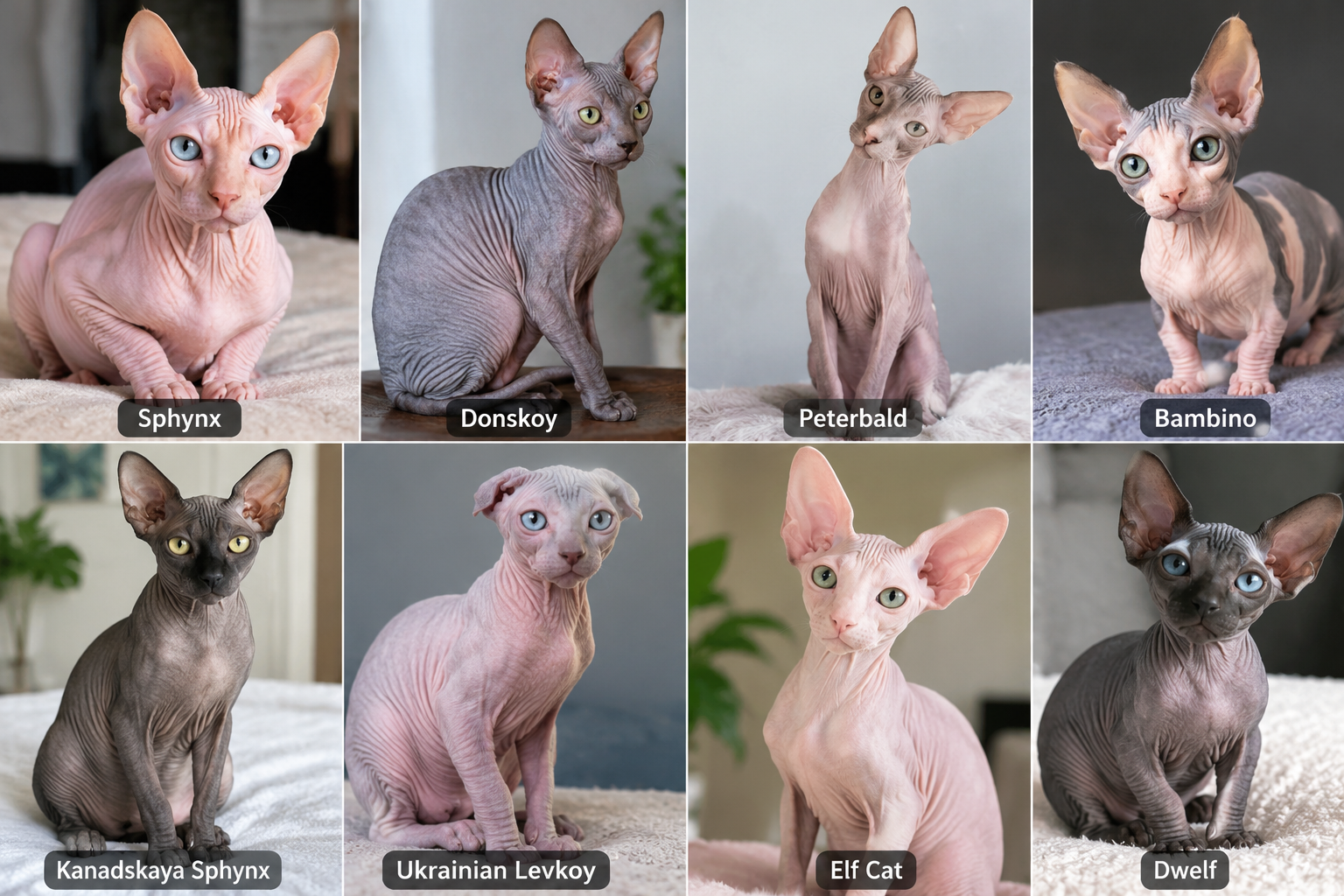
3. Peterbald Cat
The Peterbald is an unusual cat breed developed in Russia. It is known for its elegant body, long legs, large ears, and varying degrees of hairlessness.
Some Peterbald cats are completely hairless, while others have a fine, soft coat. Their skin may require regular cleaning because natural oils can accumulate more visibly without a normal fur coat.
Key characteristics:
- Origin: Russia
- Coat: Hairless or partially coated
- Personality: Affectionate, intelligent, and energetic
- Grooming: Special skin care may be necessary
Peterbald cats generally enjoy human interaction and benefit from a warm, comfortable indoor environment.
4. LaPerm Cat
The LaPerm is famous for its curly coat, which can be short or long. The curls range from loose waves to tight ringlets, making each cat look slightly different.
Key characteristics:
- Origin: United States
- Coat: Curly or wavy
- Personality: Friendly, curious, and affectionate
- Grooming: Regular brushing when needed
LaPerm cats are often playful and people-oriented. Their unusual coat makes them stand out among other domestic cat breeds.
5. Kurilian Bobtail
The Kurilian Bobtail is a distinctive breed associated with the Kuril Islands and nearby regions. Its most recognizable feature is its short, fluffy tail, which may have a unique shape on each cat.
Key characteristics:
- Origin: Kuril Islands and surrounding regions
- Coat: Short or semi-long
- Personality: Intelligent, confident, and playful
- Grooming: Depends on coat length
These cats are generally athletic and enjoy interactive games. Their strong build and bobbed tails give them a distinctive appearance.
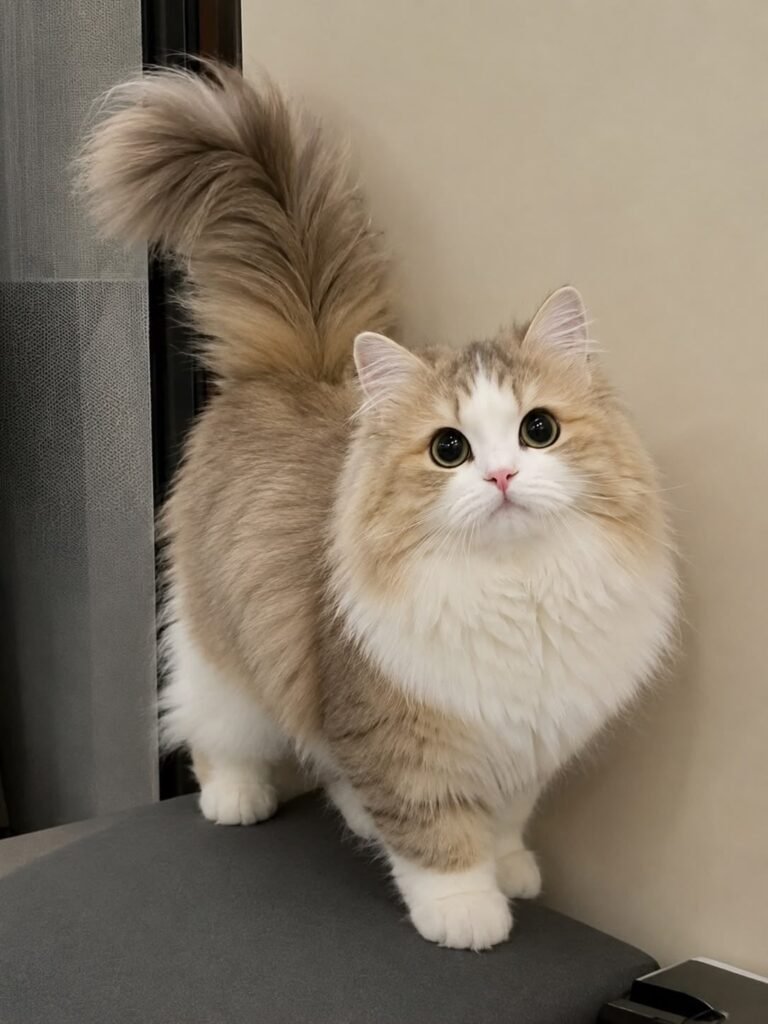
6. American Wirehair
The American Wirehair is a relatively uncommon American breed known for its wiry, springy coat. Its fur has a rough texture that distinguishes it from most other domestic cats.
Key characteristics:
- Origin: United States
- Coat: Dense and wiry
- Personality: Adaptable, calm, and playful
- Grooming: Gentle, occasional grooming
American Wirehair cats can make good companions for many households. Their coat should be handled gently to avoid unnecessary damage or irritation.
7. Turkish Van
The Turkish Van is an uncommon cat breed originating from the Lake Van region of Türkiye. It typically has a mostly white body with colored markings on the head and tail.
Turkish Vans are known for their athletic abilities and their interest in water, although not every individual enjoys swimming or bathing.
Key characteristics:
- Origin: Türkiye
- Coat: Semi-long and soft
- Personality: Energetic, independent, and curious
- Grooming: Regular brushing
These cats need opportunities to climb, explore, and play. Their energetic temperament makes environmental enrichment especially important.
8. Egyptian Mau
The Egyptian Mau is a naturally spotted domestic cat known for its elegant appearance and athletic body. It is one of the domestic cat breeds with naturally occurring spots rather than spots produced through crossbreeding.
Key characteristics:
- Origin: Associated with Egypt
- Coat: Short with dark spots
- Personality: Alert, loyal, and active
- Grooming: Low maintenance
Egyptian Maus are fast, agile cats that benefit from interactive toys and climbing structures. They may take time to become comfortable with unfamiliar people.
9. Singapura Cat
The Singapura is a small domestic cat breed with large eyes, prominent ears, and a short ticked coat. It is often recognized as one of the smallest established cat breeds.
Key characteristics:
- Origin: Singapore
- Coat: Short and ticked
- Personality: Curious, affectionate, and playful
- Grooming: Minimal
Despite its small size, the Singapura is energetic and enjoys attention. It can be a wonderful companion for people who want an interactive indoor cat.
10. Lykoi Cat
The Lykoi is often called the werewolf cat because its unusual coat creates a partially hairless, wolf-like appearance. Its fur can be sparse in certain areas, and some cats experience seasonal coat changes.
Key characteristics:
- Origin: United States
- Coat: Partially hairless with a roan appearance
- Personality: Curious, playful, and alert
- Grooming: Skin and coat monitoring
Lykoi cats are especially popular among people interested in unusual-looking feline breeds. Their exposed skin may need protection from excessive sun and cold, depending on the individual cat.
11. Minskin Cat
The Minskin is a very uncommon cat type developed using short-legged cats and breeds with reduced body hair. It has a low-set body and may have sparse fur on parts of its body.
Key characteristics:
- Coat: Sparse or short fur
- Body: Short-legged
- Personality: Social and playful
- Care: Individual grooming and mobility needs
Because of its short legs and specialized breeding background, prospective owners should carefully research health and mobility concerns. A cat’s appearance should never take priority over its welfare.
12. Cornish Rex
The Cornish Rex is known for its soft, short, wavy coat, slender body, and large ears. Unlike most cats, it lacks the typical outer guard hairs, giving its coat a distinctive texture.
Key characteristics:
- Origin: Cornwall, England
- Coat: Short and wavy
- Personality: Energetic, affectionate, and playful
- Grooming: Gentle, minimal brushing
Cornish Rex cats enjoy active play and companionship. Their fine coats may offer less insulation than those of many other breeds, so a comfortable indoor environment is important.
13. Devon Rex
The Devon Rex is a unique cat breed with large ears, prominent cheekbones, and a short, soft coat. Its slightly wavy fur and expressive face give it an unmistakable appearance.
Key characteristics:
- Origin: Devon, England
- Coat: Short and fine
- Personality: Mischievous, friendly, and intelligent
- Grooming: Gentle coat and ear care
Devon Rex cats often enjoy climbing, interactive play, and spending time with their families. They are a good match for owners who appreciate an active and affectionate companion.
14. Norwegian Forest Cat
The Norwegian Forest Cat is a large, long-haired breed developed in the forests of Norway. Although it is better established than some breeds on this list, it can still be uncommon in places where specialized pedigreed cats are difficult to find.
Key characteristics:
- Origin: Norway
- Coat: Long, dense, and weather-resistant
- Personality: Gentle, independent, and curious
- Grooming: Regular brushing
This breed has a sturdy body and a thick coat adapted to cold conditions. It benefits from climbing opportunities, a balanced diet, and regular coat maintenance.
15. Highlander Cat
The Highlander is a distinctive domestic cat breed known for its curled ears, muscular body, and naturally short tail. Some Highlanders also have polydactyl paws, meaning they possess extra toes.
Key characteristics:
- Coat: Short or long
- Appearance: Curled ears and short tail
- Personality: Playful, confident, and social
- Grooming: Depends on coat length
Highlanders are often described as energetic and people-oriented. Because breed traits and health can vary, responsible breeding and veterinary care are important considerations.
What Makes a Cat Breed Rare?
Several factors can contribute to the rarity of a cat breed.
1. Small Breeding Population
Some breeds have relatively few registered breeding cats. This can limit the number of kittens available each year.
2. Geographic Origin
Certain breeds developed in particular countries or regions. Finding them elsewhere may be difficult because relatively few breeders work with these cats internationally.
3. Unusual Physical Features
Hairless skin, curly fur, unusual coat patterns, and distinctive tails can make particular breeds recognizable. However, unusual appearance alone does not determine rarity.
4. Limited Breed Recognition
Some emerging or uncommon breeds are not recognized by every major cat association. Their availability and classification can therefore vary by organization and country.
Which Rare Cat Breed Is Best for a Pet?
The best rare cat breed depends on your lifestyle, budget, experience, and ability to meet the animal’s needs.
- For affectionate companionship: Khao Manee, Peterbald, or Devon Rex may be worth researching.
- For an active household: Sokoke, Egyptian Mau, or Turkish Van may suit people who enjoy interactive play.
- For unusual coats: LaPerm, Lykoi, or Cornish Rex offer distinctive appearances.
- For a small cat: Singapura is known for its petite size.
- For a long-haired cat: Norwegian Forest Cat is a notable option.
Individual temperament varies, even within the same breed. Before choosing a cat, consider its health, grooming requirements, activity level, and compatibility with children or other pets.
How to Care for Rare Cat Breeds
Rare cat breeds require the same essential care as other domestic cats, although some may have additional needs related to their coat or body structure.
Provide a Balanced Diet
Feed your cat a complete and balanced diet appropriate for its age and health. Fresh drinking water should always be available.
Schedule Regular Veterinary Visits
Routine veterinary examinations, vaccinations, parasite prevention, dental care, and appropriate screening can help maintain your cat’s health.
Maintain Coat and Skin Health
Long-haired cats may need frequent brushing, while hairless or sparsely coated cats may require gentle skin care. Avoid excessive bathing or harsh products unless recommended by a veterinarian.
Create an Enriched Environment
Provide scratching posts, climbing trees, interactive toys, hiding places, and daily play sessions. Mental stimulation is especially useful for intelligent and energetic cat breeds.
Choose a Responsible Breeder
If you decide to purchase a pedigreed kitten, research the breeder carefully. Ask about veterinary records, inherited health conditions, parent cats, and the kitten’s living environment. Avoid breeders who prioritize extreme physical traits over animal welfare.
Adoption from a reputable rescue or breed-specific organization may also be an option.
Are Rare Cat Breeds Expensive?
Some rare cat breeds can be expensive because of limited availability, specialized breeding, pedigree documentation, and health screening. However, there is no single price for a rare cat breed.
The cost depends on the breed, country, breeder, lineage, and local demand. In addition to the initial purchase or adoption fee, owners should budget for food, litter, veterinary visits, vaccinations, grooming, toys, and emergency medical expenses.
Always prioritize a healthy, well-socialized cat over one with an unusual appearance or a prestigious pedigree.
Frequently Asked Questions (FAQs)
1. What is the rarest cat breed in the world?
There is no universally agreed-upon single rarest cat breed. Breeds such as the Sokoke, Khao Manee, and certain emerging hairless or curly-coated breeds may be difficult to find, depending on the country and the registry used.
2. What are the most unusual cat breeds?
Some of the most unusual-looking cat breeds include the Lykoi, Peterbald, LaPerm, Cornish Rex, Devon Rex, and American Wirehair. They are known for distinctive coats, skin, or other physical features.
3. Which rare cat breed is the smallest?
The Singapura is widely recognized as one of the smallest established domestic cat breeds. Individual adult size varies according to genetics, sex, and overall health.
4. Are rare cat breeds good pets?
Yes, many rare cat breeds can make wonderful pets. However, suitability depends on temperament, socialization, health, grooming needs, and the amount of time an owner can provide.
5. Do rare cats require special care?
Some do. Hairless cats may need additional skin care and protection from temperature extremes, while long-haired cats require regular brushing. All cats need proper nutrition, veterinary care, exercise, and a safe environment.
6. Which rare cat breeds have unusual coats?
The LaPerm has curly fur, the Lykoi has a partially hairless roan coat, the Cornish Rex has short waves, and the American Wirehair has a wiry coat.
7. Are rare cat breeds suitable for apartments?
Many cats can live comfortably in apartments if they have enough space for play, climbing, scratching, and resting. Active breeds need regular enrichment, and all cats benefit from a secure indoor environment.
8. Where can I find rare cat breeds?
You can research reputable breeders, recognized cat associations, breed-specific rescues, and animal shelters. Always verify health records, breeding practices, and the animal’s welfare before making a decision.
9. Are rare cat breeds healthier than ordinary cats?
No. Rarity does not mean better health. Some breeds may have inherited health risks associated with their genetics or physical characteristics, so prospective owners should research breed-specific health concerns.
10. What should I consider before buying a rare cat?
Consider the cat’s health, temperament, lifetime care costs, grooming needs, breeder reputation, and availability of veterinary support. Responsible ownership is more important than choosing the rarest breed.
Conclusion
Rare cat breeds are fascinating because of their unusual appearances, distinctive coats, unique origins, and individual personalities. From the curly-haired LaPerm and elegant Peterbald to the petite Singapura and spotted Egyptian Mau, every breed has its own characteristics and care requirements.
However, choosing a cat should involve more than appearance or rarity. Consider the animal’s health, temperament, daily needs, and compatibility with your lifestyle before making a decision. With responsible care, proper nutrition, and regular veterinary attention, a rare cat can become a loving and rewarding companion.
Whether you are researching exotic-looking cats, unusual feline breeds, or uncommon domestic cats, learning about their individual needs is the first step toward responsible cat ownership.