Tabby Cat Patterns
Tabby cats are among the most recognizable and popular cats in the world. Their beautiful stripes, swirls, spots, and unique facial markings make them stand out from other cats. However, many people do not realize that tabby is not a specific cat breed. Instead, it is a coat pattern that can appear in many different cat breeds and colors.
Understanding tabby cat patterns can help cat lovers identify different markings and appreciate the natural beauty of their feline companions. In this guide, we will explore the five main types of tabby patterns, common tabby colors, genetics, personality traits, and tips for caring for tabby cats.
What Is a Tabby Cat?
A tabby cat is a cat with a distinctive coat pattern that usually includes stripes, spots, swirls, or bands of color. Many tabby cats also have an M-shaped marking on their foreheads, along with lines around their eyes and markings on their cheeks.
Tabby patterns can appear in domestic shorthair cats, domestic longhair cats, and many purebred cats. Popular examples include Maine Coons, Bengals, American Shorthairs, and British Shorthairs.
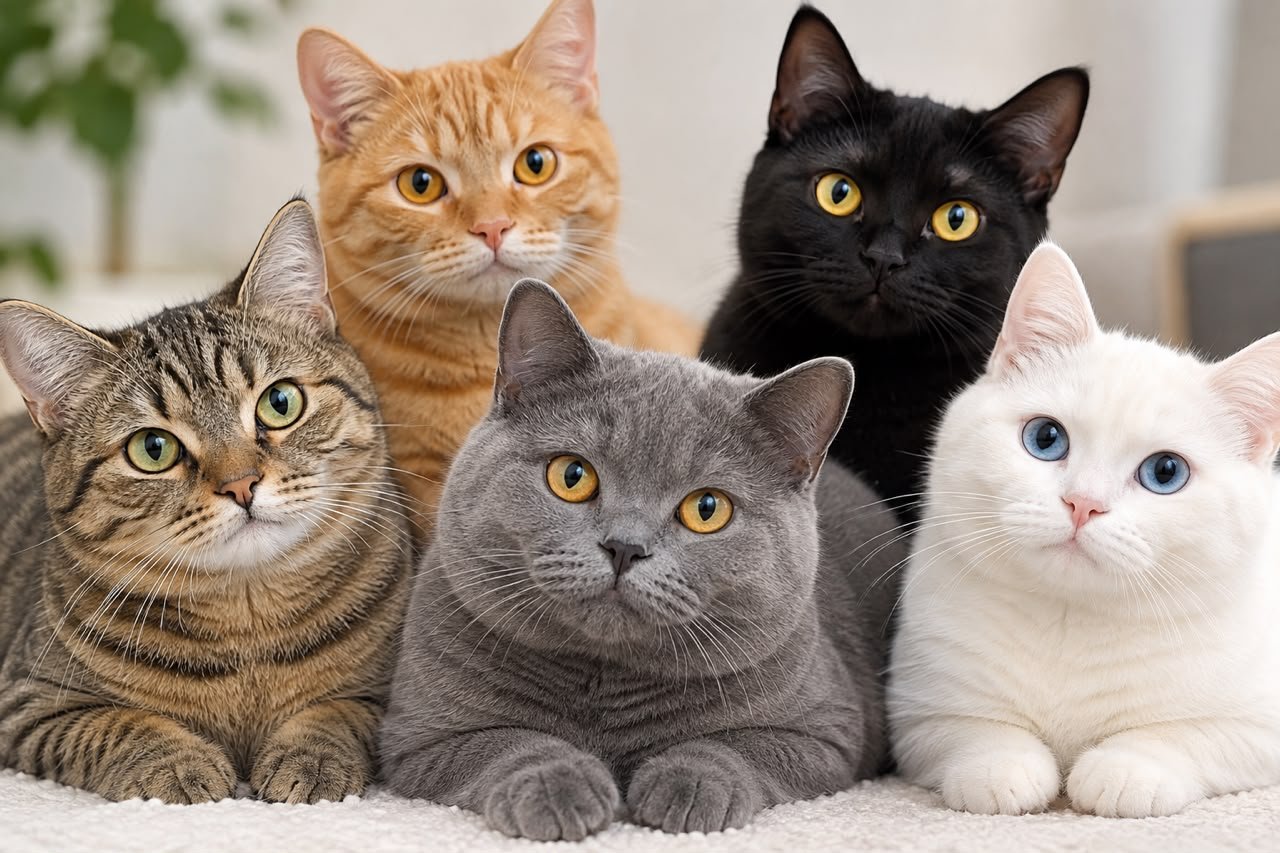
Tabby cats come in various colors, including brown, gray, orange, silver, cream, and black-based shades. Tabby Cat Patterns Their markings may be bold or subtle, depending on their genetics and coat color.
The 5 Main Types of Tabby Cat Patterns
There are five commonly recognized tabby pattern categories. Each one has distinctive markings that make it different from the others.
1. Classic Tabby Pattern
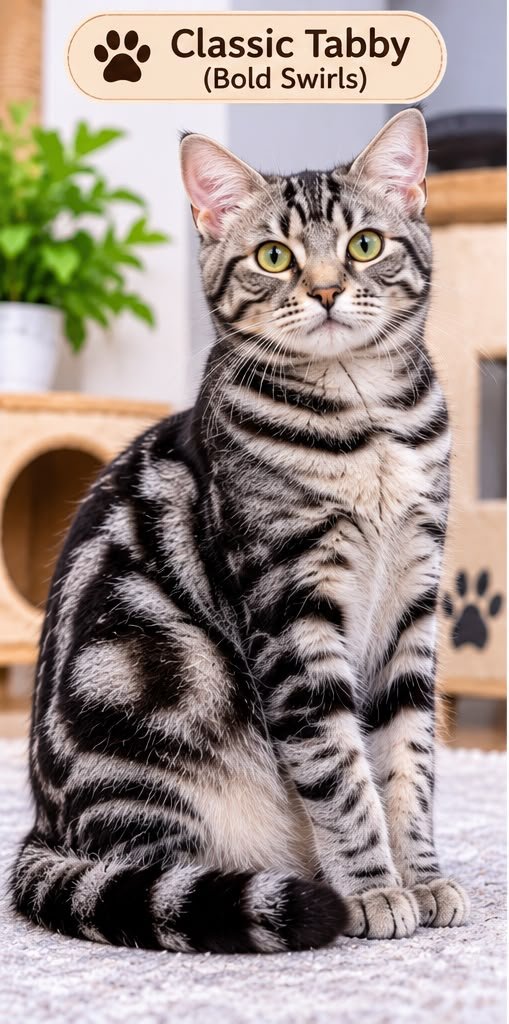
The classic tabby pattern, sometimes called the blotched tabby pattern, features broad, swirling markings along the sides of the body. These markings often resemble marble or butterfly-shaped designs.
Classic tabby cats typically have thick stripes across their shoulders, rings on their tails, and circular patterns on their sides. The contrast between the background fur and darker markings can make this pattern especially striking.
Classic tabby patterns are found in several breeds, including British Shorthairs and American Shorthairs.
2. Mackerel Tabby Pattern
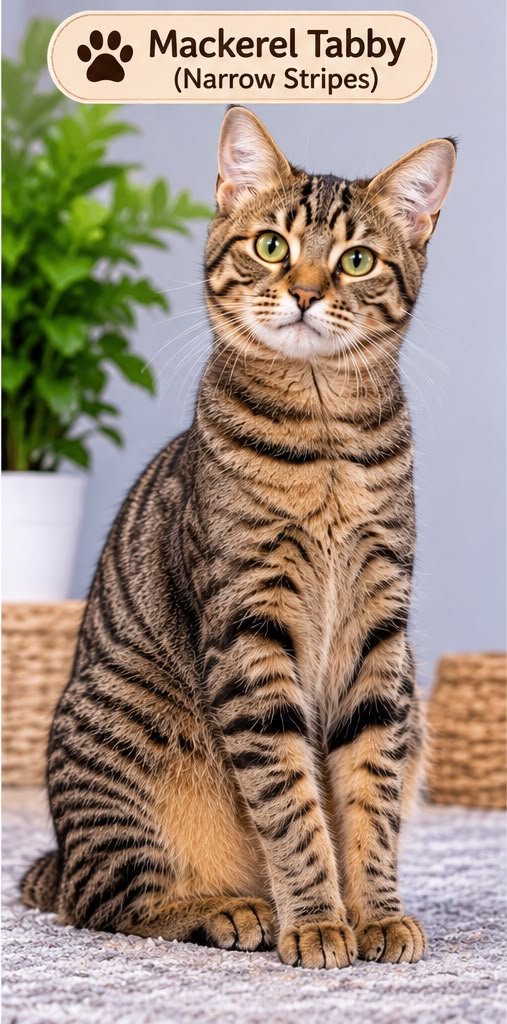
The mackerel tabby is often considered the traditional striped tabby pattern. It features narrow, vertical stripes running along the sides of the body, similar to the skeleton of a fish.
These cats commonly have a dark stripe running down the spine, with smaller stripes extending toward the belly.Tabby Cat Patterns Their legs and tails may also feature narrow rings.
Mackerel tabbies are common among domestic cats and can appear in brown, gray, orange, and other colors.
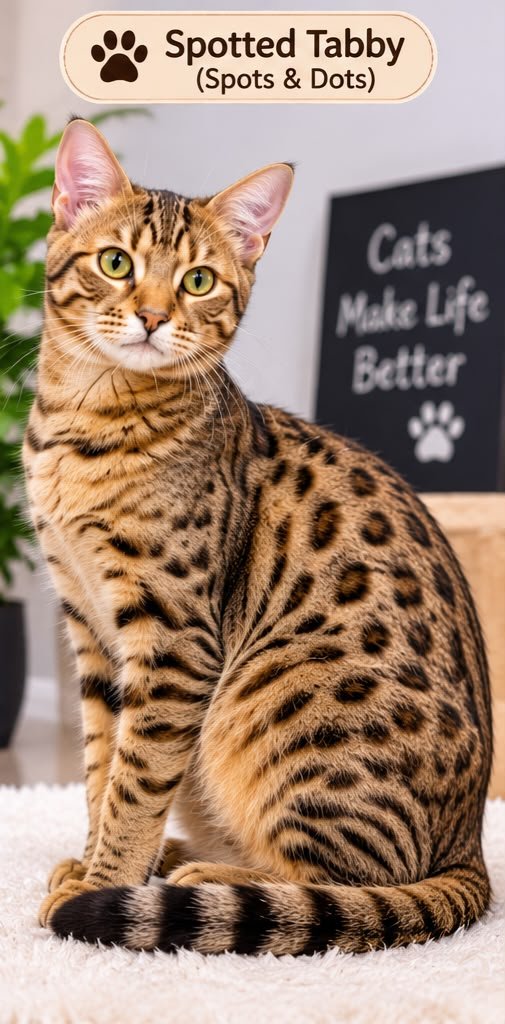
3. Spotted Tabby Pattern
Spotted tabby cats have spots across their bodies instead of continuous stripes or large swirls. The spots can be small, round, oval, or elongated, depending on the cat’s genetics.
Some spotted tabbies have clearly separated spots, while others display broken stripes that create a spotted appearance.
Bengal cats are famous for their spotted and rosetted coats, although their patterns are distinct breed characteristics and not all spotted tabbies have the same markings.
4. Ticked Tabby Pattern
Ticked tabby cats have individual hairs with alternating bands of light and dark pigment. This creates a finely textured coat that may look almost solid from a distance.
Unlike classic or mackerel tabbies, ticked cats usually have fewer obvious stripes across their bodies. However, faint markings may still appear on the face, legs, or tail Tabby Cat Patterns.
The Abyssinian is a well-known example of a breed with a ticked coat. Ticked patterns can give cats a soft, shimmering appearance.
5. Patched Tabby Pattern
Patched tabby cats display tabby markings alongside patches of another color, commonly orange or cream. This pattern is often seen in female cats with tortoiseshell coloring.
For example, a brown patched tabby may have brown stripes and orange patches across the coat. A gray patched tabby may display gray markings mixed with cream-colored areas.
Patched tabbies are sometimes called torbies when tabby patterns combine with tortoiseshell coloring.
Common Tabby Cat Colors
Tabby patterns can occur in a wide range of colors Tabby Cat Patterns. The pattern describes the arrangement of markings, while the color describes the shades of the fur.
Brown Tabby Cats
Brown tabby cats usually have a warm brown or tan background with darker brown or black markings. Their coats may feature classic swirls, narrow stripes, or spots.
Gray Tabby Cats
Gray tabby cats have gray backgrounds with darker gray markings Tabby Cat Patterns. They are sometimes called blue tabbies in cat breed terminology.
Orange Tabby Cats
Orange tabby cats, also known as ginger or red tabbies, have orange or reddish fur with darker orange markings. Many display noticeable stripes across their bodies and tails.
Silver Tabby Cats
Silver tabbies have a pale silver or nearly white background with dark markings. The contrast can make their stripes, spots, or swirls appear particularly sharp.
Cream Tabby Cats
Cream tabbies have soft, pale markings on a light cream background Tabby Cat Patterns. Their coats may look more subtle than those of darker tabby cats.
Why Do Tabby Cats Have an M on Their Foreheads?
One of the most recognizable features of tabby cats is the M-shaped marking on the forehead. This marking is part of the tabby coat pattern and results from the distribution of pigment in the fur.
Many tabby cats also have dark lines around their eyes, markings on their cheeks, and rings around their legs and tails.
Although the M-shaped marking is widely associated with tabby cats, the exact shape and visibility can vary from one cat to another.
What Causes Tabby Cat Patterns?
Tabby cat patterns are determined by genetics. Genes influence how pigments are distributed throughout a cat’s coat, creating stripes, spots, swirls, or ticked hairs Tabby Cat Patterns.
The agouti gene plays an important role in many tabby coats by influencing the banding of pigment along individual hairs. Other genetic factors affect the shape and arrangement of tabby markings.
The interaction of these genes helps determine whether a cat develops a classic, mackerel, spotted, ticked, or patched tabby appearance.
A kitten’s tabby markings may become more noticeable as it grows. However, the basic pattern is established by its genetic makeup.
Are Tabby Cats a Specific Breed?
No, tabby is not a cat breed. It is a coat pattern that appears in many breeds and mixed-breed cats Tabby Cat Patterns.
For example, Maine Coons, American Shorthairs, British Shorthairs, Bengals, and domestic cats can all display tabby markings.
If you want to identify a cat’s breed, you need to consider other characteristics, such as body shape, head structure, coat length, and pedigree information. Coat pattern alone is not enough to determine a cat’s breed.
Do Tabby Cats Have Special Personalities?
Many cat owners describe tabby cats as friendly, playful, curious, and affectionate. However, tabby cats do not share one universal personality simply because they have similar markings.
A cat’s temperament depends on several factors, including genetics, early socialization, environment, health, and individual experiences.
Some tabby cats may enjoy playing and exploring, while others may prefer quiet spaces and relaxed companionship. Getting to know an individual cat is the best way to understand its personality.
How to Care for a Tabby Cat
Tabby cats need the same basic care as other cats. Their coat pattern does not determine their nutritional or medical needs.
Here are some essential care tips:
- Provide balanced nutrition: Choose an appropriate, complete cat food based on your cat’s age and health.
- Keep fresh water available: Clean drinking water supports overall health.
- Groom regularly: Shorthaired tabbies may need occasional brushing, while longhaired cats often require more frequent grooming.
- Schedule veterinary checkups: Routine examinations and recommended vaccinations help maintain good health.
- Provide exercise and enrichment: Toys, climbing spaces, and interactive play help keep cats active.
- Monitor coat and skin health: Watch for excessive shedding, itching, bald patches, or sudden changes in fur condition.
With proper care, tabby cats can enjoy healthy, comfortable lives regardless of their specific pattern or color.
LSI Keywords for Tabby Cat Patterns
Use these related keywords naturally throughout your article to improve topical coverage and help search engines understand its subject.
- Tabby cat markings
- Types of tabby cats
- Classic tabby pattern
- Mackerel tabby cat
- Spotted tabby cat
- Ticked tabby pattern
- Patched tabby cat
- Brown tabby cat
- Gray tabby cat
- Orange tabby cat
- Silver tabby cat
- Tabby coat colors
- Tabby cat genetics
- M-shaped marking on cats
- Striped cat breeds
- Spotted cat breeds
- Different cat coat patterns
- Tabby kitten markings
- Domestic tabby cats
- Tabby cat characteristics
- Tabby cat appearance
- Cat fur patterns and colors
- Tabby vs. tortoiseshell cats
- How to identify a tabby cat
- Popular tabby cat breeds
Frequently Asked Questions (FAQs)
1. What are the main types of tabby cat patterns?
The five commonly recognized categories are classic, mackerel, spotted, ticked, and patched tabby. Each has a different arrangement of markings and colorsTabby Cat Patterns.
2. What is the rarest tabby cat pattern?
There is no universally accepted rarest tabby pattern. Rarity depends on the breed and the specific genetic combination. Some spotted or unusual patched patterns may be less common in certain cat populations.
3. Why do tabby cats have an M on their foreheads?
The M-shaped forehead marking is a common feature of the tabby coat pattern. It results from the genetic distribution of pigment that creates characteristic facial markings.
4. Are all tabby cats the same color?
No. Tabby cats can be brown, gray, orange, silver, cream, and other colors. Their markings can also vary in shape, size, and contrast.
5. Is a tabby cat a breed?
No. Tabby describes a coat pattern rather than a breed. Many purebred and mixed-breed cats can have tabby markings.
6. What is the difference between classic and mackerel tabby cats?
Classic tabbies have broad, swirling markings on their sides, while mackerel tabbies have narrow stripes running down their bodies.
7. Can a black cat have a tabby pattern?
Yes. Some black cats have faint tabby markings that become visible in bright sunlight. The visibility of these markings depends on the cat’s pigmentation and genetics.
8. Are orange tabby cats usually male?
Yes, orange cats are more commonly male because the gene responsible for orange coloration is linked to the X chromosome. However, female orange tabby cats are also common enough to be familiar to cat owners.
9. Do tabby cat patterns change with age?
A cat’s coat may change in shade or appearance as it matures, but its underlying genetic pattern generally remains the same. Lighting, seasonal shedding, and coat condition can also affect how visible the markings appear.
10. Are tabby cats good pets?
Tabby cats can make wonderful pets, just like cats with other coat patterns. Their suitability depends on their individual temperament, health, socialization, and compatibility with the household.
Conclusion
Tabby cat patterns are beautiful and diverse, ranging from the bold swirls of classic tabbies to the narrow stripes of mackerel tabbies, distinctive spots of spotted tabbies, and finely banded hairs of ticked tabbies. Patched tabbies add another layer of variety with their combinations of tabby markings and orange or cream patches.
Understanding these different tabby cat patterns helps cat lovers recognize coat characteristics and appreciate feline genetics. Remember that tabby describes a coat pattern, not a specific breed, and a cat’s markings do not determine its personality.
Whether you have a brown tabby, an orange tabby, a silver tabby, or a spotted cat, every feline has its own unique appearance and character. With proper nutrition, regular veterinary care, grooming, and affection, tabby cats can thrive as beloved family companions.